
Supplier contract management is much more than a simple administrative task. It stands as a true strategic pillar for any company concerned with controlling costs, securing supplies, and optimizing overall performance. For Procurement and Finance departments, the ability to effectively manage, track, and leverage these commercial agreements has become a determining factor for success, allowing them to minimize risks while maximizing opportunities.
A supplier contract, far from being a mere document, is a reflection of mutual commitments and reciprocal expectations. Proper management ensures not only legal compliance but also the alignment of operations with the company’s strategic objectives. This article explores in depth the crucial importance of optimized and digitalized contract management, and how it can radically transform the performance of your Procurement and Finance functions.
⏱️ Essentials in 2 minutes
- Supplier contract management is essential for reducing legal and financial risks, ensuring compliance and the security of commitments.
- Supplier cost optimization is made possible through better visibility of conditions (renegotiation, year-end rebates – YER) and increased expenditure control.
- Operational efficiency increases through centralization, real-time visibility, and automation of contract processes, freeing up time for strategic tasks.
Why is supplier contract management crucial?
Supplier contract management is an unavoidable challenge for any organization. A well-drafted and scrupulously followed contract is much more than a legal framework; it is a first-rate operational tool, guaranteeing smooth operations and the sustainability of commercial relations. It formalizes the business relationship, detailing commitments, responsibilities, and terms for execution, payment, renewal, or termination. Without a clear contractual framework, a company exposes itself to uncertainty, hidden costs, and potentially damaging disputes.
The essential role of the contract is manifested at several fundamental levels for company performance:
- Securing commitments and risk control: Each contract defines the precise terms of collaboration, thus minimizing misunderstandings and protecting the company in case of dispute. It is a legal barrier against the unexpected and a lever to assert one’s rights. Proper application and exploitation of the contract’s general and specific conditions are the spearhead of your negotiating power. They contribute to creating a stable and predictable business environment, crucial for strategic planning.
- Optimizing costs and supplier relationships: Contracts define pricing conditions, volumes, service levels (SLAs), and payment terms. Proactive management not only allows for identifying and seizing renegotiation opportunities as deadlines approach but also ensures that year-end rebates (YER) and other negotiated advantageous conditions are effectively applied. This continuous optimization of contractual conditions improves the overall quality of the supplier relationship, making it fairer and more transparent.
- Increasing operational efficiency: By defining a clear framework for purchasing, delivery, receipt, and invoicing processes, contracts reduce ambiguity and the mental load on teams. Clear visibility of contractual terms simplifies daily operations, automates certain checks, and allows employees to focus on high-value strategic topics rather than managing contingencies or searching for scattered information.
- Compliance for internal and external audits: In the event of an audit (financial, quality, regulatory), rigorous contract management provides the necessary documentation to prove compliance with current regulations (business law, GDPR, etc.) and internal company policies. It ensures the traceability of commitments and decisions, which is indispensable for transparency and good governance. The company’s legal services scrupulously oversee regulatory requirements and the compliance of each contract, thus protecting the company from potential sanctions.
In short, integrating effective supplier contract management into the company’s global strategy allows for effective spending control, minimization of supply chain risks, and solidification of relationships with business partners. It is the first step toward sustainable performance and operational excellence.
 Centralize and track your contractual deadlines with our free supplier contract repository template.
Key elements of a solid supplier contract
An effective supplier contract is a precise and exhaustive document, built on an architecture of rigorous clauses, both mandatory and strategic. The clarity and completeness of these elements are paramount to avoid any dispute, ensure smooth execution of services, and secure the company’s interests over the long term. Each clause is an essential link that contributes to the strength of the agreement.
Mandatory and fundamental clauses
These clauses form the base of any contract and are essential for its legal validity and proper understanding by all parties. Their absence or imprecision can call into question the entire agreement.
- Identification of the contracting parties: It is imperative to detail with precision the full legal identity of the co-contractors. This includes the name or corporate name, registered office address, SIRET number (or equivalent for foreign entities), legal form, as well as the name and capacity of the legal representative authorized to bind each party. Unambiguous identification avoids any subsequent challenge to competence, liability, or validity of the agreement.
- Object of the contract: This clause defines the exact nature of the goods or services that are the subject of the commercial agreement. It must specify in detail the planned volumes (with minimum or maximum thresholds if applicable), expected qualities (norms, certifications, technical standards), functional characteristics, and any other relevant technical specifications. Specifying these elements ensures execution in line with company expectations and prevents deviations in terms of quality or scope of services.
- Pricing and payment terms: These are the financial elements of the contract, which must be stated with the utmost clarity. They mention the amounts excl. tax/incl. tax, price units of measure, potential price revision conditions (reference indices, revision frequencies), payment terms granted (complying with legal provisions like Article L441-10 of the Commercial Code for inter-company deadlines), invoicing methods, and penalties applicable in case of late payment or non-compliance with financial commitments. Transparency on these points is a guarantee of a good relationship and budgetary control.
- Delivery and receipt terms: This section covers all logistics and performance aspects. It must specify delivery or execution deadlines, Incoterms® (International Commercial Terms) which precisely define responsibilities, costs, and risk transfer points between parties, delivery locations, as well as detailed procedures for receiving goods or services. These procedures include quality control conditions, complaint deadlines in case of non-compliance, and dispute resolution mechanisms related to delivery.
 Effectively frame your supplier needs with our free specifications template.
Strategic and legal clauses
Beyond the fundamentals, certain clauses provide an essential layer of legal security and a long-term strategic vision. They reflect proactive risk management and anticipation of possible developments in the relationship.
- Duration of the contract, renewal, and termination terms: The start date and end date of the contract must be clearly indicated. Particular attention and meticulous drafting are required for the tacit renewal clause. Although common, it represents a major risk if not tracked by an effective alert tool, potentially leading to the renewal of sub-optimal commitments. Terms for early termination (notice periods, breach conditions for serious misconduct, force majeure, or convenience) must also be precisely defined to provide flexibility and a secure exit strategy if necessary.
- Specific legal clauses:
- Confidentiality (NDA – Non-Disclosure Agreement): Indispensable for protecting sensitive, strategic, or commercial information exchanged between parties during the contract term and often beyond.
- Personal data processing (GDPR compliance): If the contract involves the processing of personal data, this clause is imperative to guarantee compliance with the General Data Protection Regulation (GDPR) and define the roles (data controller, processor) and obligations of each party.
- Intellectual property: Clarifies the attribution of intellectual property rights on creations, innovations, or developments resulting from the collaboration. This is crucial, especially in service contracts involving R&D or software development.
- Force majeure: Precisely defines unforeseen, irresistible, and external events that can suspend or terminate the contract without engaging the liability of the parties.
- Arbitration or jurisdiction clauses: Determine the dispute resolution method (arbitration or state courts) and the competent jurisdiction in case of disagreement, which is essential for anticipating the costs and duration of proceedings.
- Stakeholders and their roles: It is useful to mention key operational managers for each party, the preferred supplier contact, as well as the reference buyer or legal expert within the company. This clarity of interlocutors facilitates communication, daily contract management, and rapid problem resolution.
Risks of poor contract management
Deficient contract management is a source of major vulnerability for any company, potentially having disastrous repercussions on its financial performance, reputation, and legal stability. The consequences can be multiple, ranging from direct financial loss to degradation of relationships with suppliers, as well as significant legal and compliance risks. It is crucial to be aware of these risks to anticipate and implement necessary preventive measures.
| Risks of poor contract management | Potential impacts for the company |
|---|---|
| Unanticipated automatic renewals | Unforeseen additional costs, loss of negotiating power, inability to change suppliers in time. Maintenance of sub-optimal commitments. |
| Direct or indirect financial losses | Commitments not renegotiated at the best price, non-application of rebates (YER), failure to compete, payments not in line with negotiated conditions, loss of earnings. |
| Disputes and litigation | Absence of clear clauses on quality, delivery, or liability, leading to costly and time-consuming legal actions and a degradation of relations. |
| Obsolete contractual data and lack of visibility | Incorrect contact information, outdated commercial conditions, inability to anticipate deadlines or manage commitments. Difficulty in making informed decisions. |
| Regulatory non-compliance | Absence of clear documentation in case of audit, fines, criminal or civil sanctions, and serious damage to company reputation. Risk of GDPR sanctions. |
| Increased supply chain risks | Difficulty in identifying high-risk suppliers (economic uncertainty, political unrest, natural disasters), impacting supply chain resilience. |
The classic and often costly example is that of unanticipated automatic renewal. Imagine a medium-sized company that, for lack of an effective reminder system or an up-to-date contract library, mistakenly renews a yearly logistics contract worth €250,000. This negligence costs it, according to the example we’ve seen, 15% more than the rate it could have obtained with a new supplier, even though one was already identified on the market. The lack of visibility on future deadlines leads here to significant and totally avoidable overspending, weighing down the procurement budget without any added value.
Financial losses are not limited to renewals. They can come from commitments not renegotiated at the best price, a failure to compete due to lack of time, or the inability to apply year-end rebates (YER) or advantageous payment conditions simply because operational teams do not have clear and accessible knowledge of the contractual terms. These “missed opportunities” are all the more insidious as they are not always directly visible in dashboards.
The absence of clear and detailed clauses can also lead to costly and time-consuming disputes. Whether it’s a product or service quality issue, an unjustified delivery delay, or a disagreement over liability in case of failure, a vague or incomplete contract is an invitation to disagreement. These contentions can generate significant legal fees, monopolize precious internal resources, and permanently harm relations with partners who could be strategic.
Finally, manual or fragmented contract management inevitably leads to obsolete data and a lack of visibility. Supplier contact information, commercial conditions, execution times, or service levels can change without being updated in a centralized repository. It then becomes impossible to have an overall view of the company’s commitments, proactively manage spending, or anticipate next steps, making decision-making ineffective and reactive rather than strategic.
Poor contract management also impacts the supply chain by increasing risks. The absence of validation, certification, and traceability tools makes it difficult to identify high-risk suppliers, whether due to economic uncertainty, political unrest, or natural disasters. This is essential to managing your organizational risk and the resilience of your business.
 Simplify your tender analyses with our ready-to-use supplier comparison table.
Optimizing management: towards a digital and integrated contract repository
Faced with the risks inherent in obsolete and fragmented contract management, digitalization is an essential solution. The goal is to move from a dispersed and manual model—a source of errors and losses—to a centralized digital contract repository, accessible and perfectly integrated with procurement and financial processes. This transformation is the key to proactive, efficient, and secure management.
Centralization and accessibility
The first fundamental step of optimization lies in the creation of a digital contract library. This centralized tool becomes the nerve center for all contractual information, offering a multitude of advantages for operational and strategic teams:
- Centralized, secure, and instant access: All signed contracts, as well as their amendments, specific clauses, and supporting documents, are stored in a unique, secure, and constantly updated space. They are logically classified, facilitating rapid and targeted access for authorized stakeholders, regardless of their geographical location. This access is via a password-protected web portal, ensuring information confidentiality while ensuring availability.
- Customizable automatic alerts before expiry: No more unexpected and costly tacit renewals. The digital contract library allows for setting custom alerts at strategic intervals (e.g., 30, 60, 90 days before termination or renegotiation deadlines) for each contract. This notification system ensures teams have the necessary time to analyze, renegotiate terms, or terminate the contract with full knowledge. A SME, for example, was able to avoid renewing insurance contracts thanks to precise alerts at D-60, achieving a 12% gain on the annual premium.
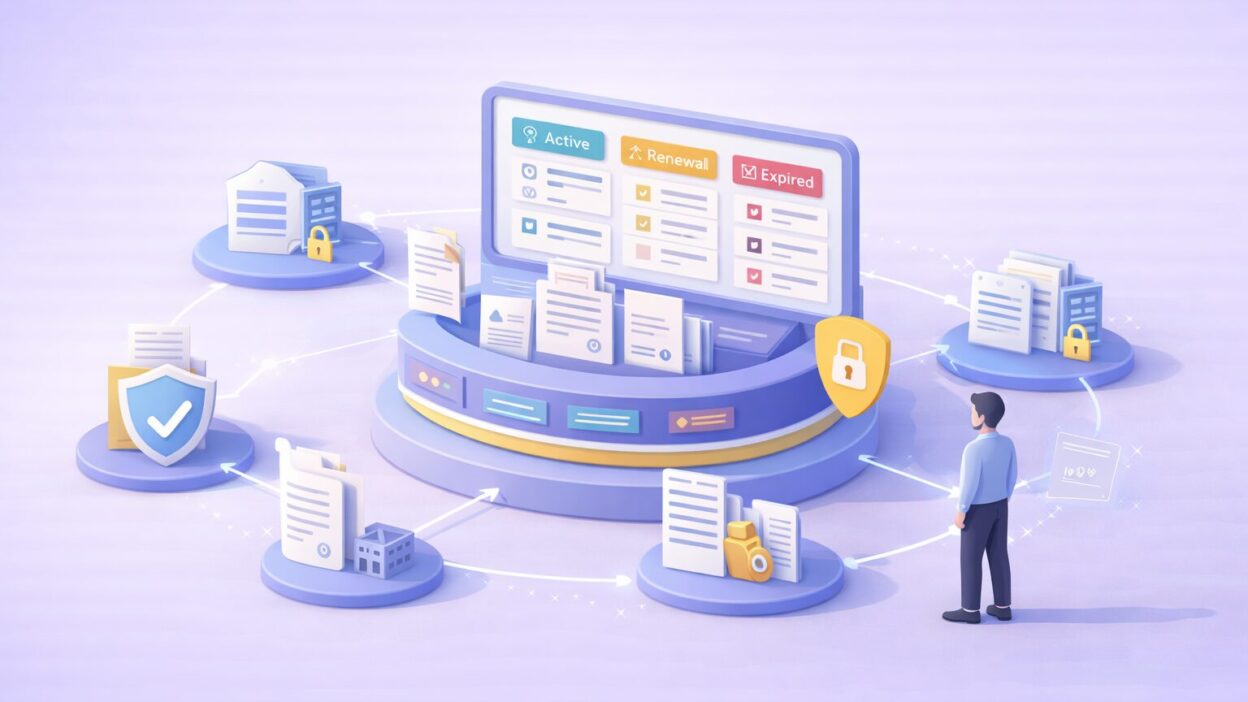
- Automatic contract status for global visibility: Each contract has a clear and dynamic status (active, to be renegotiated, expired, terminated, awaiting validation), providing an instant overview and facilitating the steering of the contract portfolio. This status is updated in real-time and can be viewed via interactive dashboards.
- Direct and native link between contract, order, product, and supplier: A high-performance contract library does not just store documents. It allows linking each contract to corresponding operational elements: purchase orders, products or services purchased, and the associated supplier. This ensures complete traceability from commitment to execution, reduces non-compliant spending, and guarantees that every order scrupulously respects contractual conditions. Native integration with electronic invoicing is also a major asset, allowing for automatic verification of invoiced prices.
Strategic integration and automation
Digitalization goes well beyond simple document centralization. A truly integrated contract library becomes a real strategic lever, automating repetitive tasks, strengthening inter-departmental collaboration, and providing precious data for decision-making.
- Connection to procurement management (Purchase-to-Pay): Linking the contract library to the purchase management system (P2P) drastically reduces non-compliant spending (or “maverick spending”). Every purchase request, order, or invoice can be automatically checked against the terms of the associated contract. This verification ensures compliance with prices, quantities, service levels, and specific conditions, guaranteeing budget optimization and spending compliance.
- Advanced integration into SRM (Supplier Relationship Management): The contract is the foundation of a good supplier relationship. Integrating the contract library into your SRM solution offers a reliable and considerably enriched supplier database. You have a full history of exchanges, centralized contractual and supporting documents, and visibility on real performance levels (quality of products or services delivered, precise tracking between estimated and actual delivery dates). This allows for holistic steering of the supplier relationship, identification of strategic suppliers, and strengthening of partnerships.
- Automation of reminders and validation workflows: The digital solution automates reminders, whether notifications to suppliers (pre-configured emails for a harmonized and effective relationship) or internal alerts to stakeholders for revision or renewal. Customizable and automated workflows can be implemented for contract or amendment creation, validation, and signature, accelerating processes, reducing bottlenecks, and minimizing manual errors.
- Complete traceability of negotiations and amendments: All modifications, negotiations, adjustments, and amendments are accurately historized: who did what, when, and why. This traceability ensures increased transparency and compliance, crucial in case of audit or dispute. The ability to collaborate with all stakeholders within an open but secure ecosystem, with features like “@” tags for relevant contacts, promotes efficiency and shared responsibility.
 Centralize your information with our free supplier database template.
Diagram: The Digitalized Contract Management Process
 Simplify your purchasing processes with our ready-to-use purchase order template.
Tangible benefits of digitalization for Procurement and Finance
The transition to digital contract management offers tangible benefits that directly impact the performance of Procurement and Financial departments. This strategic transformation allows moving from reactive and often costly management to a proactive approach, creating value and generating serenity.
Risk reduction and compliance
Digitalization acts as a robust shield against vulnerabilities inherent in manual contract management, guaranteeing increased protection for the company.
- Guarantee compliance with regulatory and legal requirements: Contracts are governed by a complex body of laws and regulations (business law, consumer law, GDPR, etc.). A contract management solution ensures that contract templates used are always up to date with the latest regulations and that sensitive clauses (personal data protection, intellectual property, ethical clauses) are correctly integrated, followed, and respected. This considerably reduces the risk of fines, criminal or civil sanctions, and costly litigation.
- Early detection of operational and financial risks: Thanks to global and consolidated visibility across the entire contract portfolio and on each supplier’s performance, it becomes easier to identify high-risk suppliers. These risks may be linked to economic uncertainty (fluctuations in raw material prices), political unrest (geopolitical instability impacting the supply chain), or natural disasters. The solution ensures early detection of potential risks and allows for faster and more appropriate handling of breaches of applicable contract law, improving the company’s overall risk management.
- Ensure proper exploitation of negotiated contractual conditions: Intense contract negotiation is useless if their conditions are not fully exploited on the ground. Digitalization ensures that year-end rebates (YER) are effectively triggered, that advantageous payment conditions are respected by financial services, and that penalties provided in case of non-compliance with commitments are applied. This rigorous exploitation of contractual conditions ensures that no financial opportunities are missed.
- Avoid human error and guarantee legal security: Automation of processes, intelligent alerts, and centralization of documents drastically reduce human error. Forgotten deadlines, use of obsolete contract versions, erroneous manual entries: these flaws are minimized. This significantly reinforces the legal security of each commitment, guarantees healthy order management, and a reliable contractual base for all transactions.
Efficiency and performance gains
Beyond legal security and compliance, digitalizing contract management releases considerable potential for operational efficiency and financial performance, transforming teams into profit centers rather than cost centers.
- Drastically improve document management and access to information: No more overflowing binders, saturated cabinets, and scattered information. Contract management software allows digitizing paper documents via optical character recognition (OCR) and easily importing electronic contracts. Advanced features, notably version control, ensure that one always works with the latest version of the contract. All relevant documentation is available from a single place, facilitating an effective corporate strategy of dematerialization.
- Update contracts in real-time and guarantee their compliance: A centralized digital repository ensures that your staff works from the most recent contract templates, compliant with the latest agreements and negotiated conditions. If your staff needs to access a contract during a trip, password-protected web access allows them to view the latest versions anytime and anywhere, with a simple Internet connection. This way, the latest models and clauses are open to any authorized staff member, ensuring consistent consistency and compliance.
- Significantly increase the productivity of Procurement and Finance teams: Complete automation of the purchasing function, through customizable workflows, accelerates the entire contract management process. Creation of task lists, automatic email notifications, and the ability to clearly define escalation procedures remind managers of next steps. Getting rid of manual and tedious processes allows employees to be more productive, focus on analysis and strategy, and deliver better results for the company.
- Optimize company financial and operational performance: By centralizing and digitalizing contract management, the company gains a clear, analytical, and real-time view of its commitments. This visibility allows optimizing the conditions of their agreements, monitoring contract execution in a way that maximizes both financial performance (better purchasing conditions, YER exploitation, cash flow optimization) and operational performance (SLA compliance, better supply quality). While minimizing risk, it’s a set of essential elements for the company’s overall success.
 Free resource banner offering a detailed comparison of different market solutions for digitalizing the purchasing department.
Best practices for optimal contract tracking
Beyond tools, implementing high-performance contract management relies on adopting organizational and methodological best practices. They structure the process, guarantee sustainable efficiency, and maximize the value extracted from each agreement.
- Nominate a dedicated contract referent: Whether it’s the CFO, procurement manager, a lawyer, or a specialized contract manager, designating a single pilot for contract management ensures a global vision, consistency of practices, and clear responsibility. This referent will be the guarantor of proper procedure application, the contract repository tool, and coordination between various internal stakeholders.
- Use up-to-date standard contract templates: Develop a library of standard contract templates for recurring purchases (IT services, office supplies, maintenance contracts, etc.). These models must be regularly revised and updated by the legal department to integrate regulatory changes and best practices. This ensures constant legal security and an acceleration of drafting and negotiation processes.
- Create a customizable validation workflow by category: Implement a digital and formalized validation process for each new contract or amendment. This workflow must be customizable based on the contract category, its amount, its duration, or its risk level. It must involve relevant stakeholders (initiating buyer, legal department, financial department for the budget, concerned operational managers), thus ensuring compliance, speed of execution, and operational adequacy.
- Classify contracts in a structured and logical manner: Adopt a rigorous and consistent contract classification method within the digital library. Whether by supplier, purchase category, amount, expiry date, duration, status, or user department, relevant classification facilitates searching, tracking, and analysis of the contract portfolio. Dynamic filters within the tool are indispensable for this approach.
- Regularly update data and contract state: A contract is not a static document. Any modification (amendment, change of supplier or internal contact, modification of pricing or delivery conditions) must be immediately reflected and tracked in the repository. The contract state (active, being renegotiated, terminated, in dispute) must also be updated in real-time for precise and reliable visibility, thus avoiding the use of obsolete information.
- Integrate contracts into supplier performance evaluation: Real supplier performance (deadline respect, deliverable quality, responsiveness, SLA compliance) must be systematically compared with contract clauses. This objective evaluation allows measuring commitment respect, identifying gaps, and having factual arguments for future renegotiations, or for deciding whether or not to maintain the business relationship.
- Continually sensitize and train teams: The best contract library and the most advanced processes are useless if end users are not trained and sensitized to their importance. Regular training sessions, clear user guides, and accessible support are essential to ensure optimal tool and process adoption, thus cultivating a culture of contractual rigor within the company.
Contract management, a pillar of excellence
At the end of this deep exploration, it appears with undeniable clarity that supplier contract management is much more than a simple administrative task or a legal obligation. It stands as a true pillar of operational and strategic excellence for Procurement and Financial departments. In a constantly evolving business world, characterized by complex supply chains, market volatility, and increasing regulatory compliance imperatives, mastering contractual commitments has become a key factor for success, resilience, and value creation.
The benefits of digitalizing this management are immense and transformative: unparalleled visibility over the entire contract portfolio, unprecedented responsiveness to deadlines, renegotiation opportunities, and contingencies, a drastic reduction in legal, financial, and operational risks, and a newfound serenity for teams who can now focus on high-value tasks rather than the tedious management of paper or spreadsheets. The company that invests in a digital and integrated contract library provides itself not only with a protective shield but also with a major competitive advantage, optimizing its costs, securing its supplier relations, and strengthening its compliance.
Weproc is your ideal partner in this strategic transformation. Our intuitive and connected platform gives you the tools necessary to centralize, track, and steer your supplier contracts with unparalleled efficiency. From custom validation workflows to the intelligent contract library linked to your Purchase-to-Pay processes, including advanced SRM management and automated alerts, Weproc is the proven solution for modern, agile, and high-performance contract management aligned with your goals of excellence.
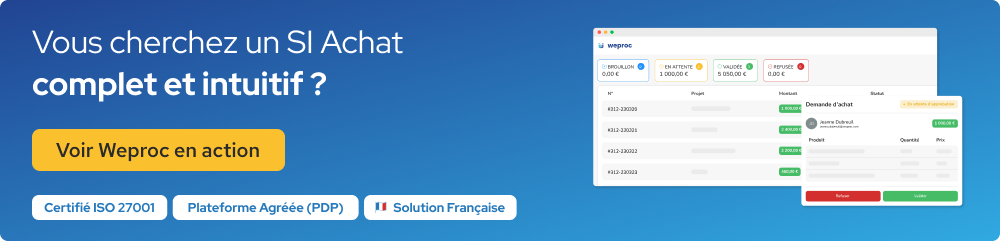 Looking for a high-performance Procurement SI? Discover Weproc’s intuitive interface.