
Managing supplier invoices represents, for many companies, a constant administrative and financial challenge. Historically time-consuming and prone to errors, this task is evolving dramatically with the advent of mandatory electronic invoicing in France. This digital transformation is not merely a regulatory constraint; it is above all a tremendous opportunity to optimize procurement processes, strengthen accounting practices, and build stronger, more transparent supplier relationships.
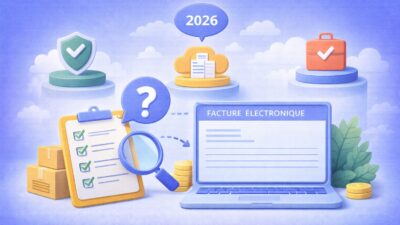
Anticipating and adopting electronic invoicing by 2026 has become a strategic imperative. This article explores in depth the implications of this reform, the limitations of manual approaches, the concrete benefits of digitalization, and the essential steps for a successful transition. We will see how solutions like Weproc can transform a cost center into a genuine lever for growth and performance for your company.
⏱️ The Essentials in 2 Minutes
- Electronic invoicing will become mandatory for all private companies: reception of electronic invoices starting July 1st, 2024 and progressive issuance between 2024 and 2026 depending on company size.
- The digitalization of invoices enables substantial savings, estimated between 50% and 75% on processing costs compared to manual management.
- Time savings are considerable: invoice processing and approval takes 17.6 days on average for manual management down to just 3.9 days with an automated solution.
- This transition strengthens tax compliance, improves accounting traceability, and optimizes cash flow management.
- Adopting a procurement management platform like Weproc is a key step to centralize, automate, and secure the entire supplier invoicing process.
Understanding Electronic Invoicing and its Legal Framework
Electronic invoicing, or e-invoicing, is far more than a simple digitization of paper documents. It involves the issuance, transmission, and receipt of invoices in a dematerialized format, whose data is structured and can be processed automatically. To distinguish between e-invoicing and e-reporting, key elements of the reform, consult our dedicated article. Unlike a simple PDF sent by email – which is a digitized invoice but not necessarily electronic in the regulatory sense – the electronic invoice is characterized by its technical format guaranteeing its authenticity and integrity.
It is crucial to distinguish the different types of electronic invoices:
- The structured invoice: It consists of data structured according to a specific standard, such as EDI (Electronic Data Interchange) or the Factur-X format. These formats allow automatic interpretation by company IT systems, facilitating direct integration into accounting software.
- The unstructured invoice: This is generally a document in PDF format transmitted by email or imported via a web portal. Although digital, its structure is not directly exploitable by a machine without optical character recognition (OCR) and is not considered a “true” electronic invoice by French legislation without specific processing.
- The hybrid invoice: This is a format that combines the advantages of the two previous ones. It consists of a human-readable PDF document and an attached structured data file (for example, an XML file). The Factur-X format is a typical example of a hybrid invoice, offering both visual readability and machine exploitability.
The European Union played a pioneering role in this regard with the EN16931 standard. This standard defines a semantic data model for electronic invoices for cross-border exchanges, primarily in public procurement. Its objective is to facilitate interoperability between the invoicing systems of different member states, thus reducing project management costs and pooling IT investments for companies.
In France, the 2020 Finance Law, particularly its article 153, laid the foundations for the generalized obligation of electronic invoicing. To understand the roles of each party in this architecture, notably the PPF and Approved Platforms, read our article on the architecture of platforms and key roles (PPF, PA, OD, Chorus Pro). This reform is part of a dual logic: to combat VAT fraud and modernize relations between companies and the tax authorities. To guarantee its origin and the permanence of its content, the electronic invoice must be authenticated by an electronic signature or transmitted via a secure Electronic Data Interchange (EDI).
It is important to note that these dates concern the progressive implementation. As of September 1st, 2026, all companies must be able to issue and receive invoices in electronic format. This transition represents a major change that requires careful preparation and the adoption of suitable solutions.
The Limitations of Manual Supplier Invoice Management
Manual management of supplier invoices, despite its apparent simplicity for small structures, is in reality a source of many obstacles and hidden costs. Each step, from reception to archiving, is potentially a friction point that impacts company productivity, reliability, and cash flow.
One of the major risks lies in data entry errors and document loss. Whether invoices are received by mail, by email in the form of unstructured PDFs, or even from disparate supplier portals, their manual entry into accounting software or Excel spreadsheets is a repetitive and tedious task. This data entry is an open door to typos, omissions, or duplicates. A poorly classified document, lost, or rendered illegible by printing can result in payment delays, disputes with suppliers, or even penalties.
The time-consuming processing is another significant limitation. A study shows that companies managing their invoices entirely manually need an average of 17.6 days to process and approve a single invoice. This figure is to be compared to the 3.9 days necessary for fully automated companies. This gap represents a considerable operational cost, mobilizing human resources on low-value-added tasks instead of more strategic missions for the procurement or accounting department.
Beyond the time spent, one must consider the hidden costs. Printing paper invoices incurs expenses in supplies (paper, ink), but also in equipment (printers, copiers) and maintenance. Physical storage and archiving of paper documents generate costs for filing, storage space, and dedicated personnel. Processing costs are not limited to reception and data entry; they also include analysis, reconciliation with purchase and receipt orders, validation, and manual payment monitoring. Not to mention the costs related to document loss or corrections following errors.
Finally, the lack of visibility into cash flow is a major disadvantage. Manual management does not allow a real-time overview of financial commitments and future payments. This opacity makes it difficult to anticipate cash flow discrepancies and to manage budget forecasting. The company may find itself paying invoices late not out of bad faith, but due to lack of centralized information and fluid processes, negatively impacting its reputation and business relationships.
Digitalization: A Lever for Optimization and Performance
Moving to electronic invoicing and dematerializing processes is no longer a choice, but a strategic necessity for any company wishing to remain competitive. This transition offers considerable optimization potential, both operationally and relationally.
Immediate Operational Benefits
The most direct impact of dematerialization is measured in terms of productivity and efficiency. The significant time savings is the first notable advantage. By automating the receipt, entry, control, and validation of invoices, the processing time drops on average from 17.6 days to just 3.9 days. This acceleration frees accounting and procurement teams from repetitive tasks, allowing them to focus on higher value-added missions, such as spend analysis, contract negotiation, or risk management.
The cost reduction is equally impressive. Studies estimate that digitalization can generate savings of 50% to 75% compared to paper processing. These savings come from the elimination of printing, postage, physical archiving fees, and the optimization of employee working time. Costs related to errors (rework, disputes, penalties) are also drastically reduced.
The improvement of data reliability and accounting traceability is another major asset. Electronic invoicing solutions, such as those offered by Weproc, integrate automatic control mechanisms and action history. Each invoice is centralized, its status is updated in real time, and all stages of its processing (reception, validation, payment) are recorded. This guarantees unprecedented data integrity and greatly facilitates internal and external audits, particularly during tax checks where the compliance of digital archives is essential.
Finally, digitalization enables acceleration of validation and payment processes. Approval workflows are digitized and can be customized according to company rules. Automatic reminders and push notifications ensure that invoices do not remain unnecessarily blocked. This fluidity in validations makes it possible to meet the legally required payment deadlines (30 or 45 days after the date of invoice receipt), thus avoiding late payment penalties and strengthening the company’s reputation with its suppliers.
Improvement of Supplier Relationships
Beyond internal benefits, electronic invoicing is a powerful tool for consolidating relationships with your commercial partners, an aspect often underestimated yet nonetheless capital.
Respecting payment deadlines is a cornerstone of a good supplier relationship. By reducing payment delays, the company positions itself as a reliable and trustworthy customer. The General Directorate for Competition, Consumer Affairs and Fraud Control (DGCCRF) closely monitors compliance with legal payment deadlines between professionals, and sanctions can be heavy in case of repeated failure. Digitalization makes it possible to avoid these situations by ensuring better visibility and rigorous monitoring of deadlines.
The transparency and speed of invoice processing help reduce disputes and misunderstandings. Gone are the lost invoices, missing purchase orders, or endless discussions about payment status. With a centralized platform, all information is accessible and unified. Suppliers can themselves track the status of their invoices, which reduces follow-up calls and improves mutual trust.
Digitalization promotes collaboration and transparency. By offering suppliers a dedicated portal to submit their electronic invoices and track their processing, the company establishes a more fluid and cooperative dialogue. Both parties share similar information levels, breaking down traditional barriers and enabling a better understanding of each party’s expectations. This strengthened collaboration is a strategic asset.
Finally, better visibility into spending and cash flows allows you to negotiate better conditions with suppliers. To succeed in this collaboration, it is essential to effectively support your suppliers in the transition to electronic invoicing. By having precise knowledge of purchase history, volumes, and supplier performance, the company is in a strong position to renegotiate prices, delivery times, or payment terms. Suppliers are also more inclined to grant benefits (discounts for early payment, privileged conditions) to reliable customers whose processes are smooth.
Key Steps for a Successful Transition to Electronic Invoicing
The transition to electronic invoicing is a major project that requires a methodical approach. It is not simply about installing new software, but about rethinking and optimizing all processes related to procurement and supplier accounting.
Prepare and Audit
The first phase is crucial: it involves understanding the current situation before wanting to transform it. A thorough internal audit of procurement and accounting processes is essential. This audit should examine each step, from purchase requests to invoice archiving, including goods receipt and payments.
The objective is to identify blockages and manual steps that slow down processing, generate errors, or unnecessary costs. Ask yourself the following questions:
- How are invoices received (email, mail, portal)?
- What is the current data entry method (manual, basic OCR)?
- How is reconciliation with purchase and receipt orders performed?
- What are the validation workflows and who are the approvers?
- What are the processing times for each step and what are the frequent delays?
- What is the volume of incoming invoices per month and the proportion of paper/electronic?
It is essential to map current workflows to visualize the entire journey of an invoice. This mapping helps highlight bottlenecks, redundancies, and ambiguous responsibilities. Do not hesitate to involve the different stakeholders (procurement, accounting, operations) to obtain a complete and shared vision.
Finally, it is necessary to define clear and measurable optimization objectives. Is it primarily about reducing costs, saving time, improving expense control, increasing visibility, or strengthening compliance? These objectives will guide the choice of solutions and the definition of new processes.
Implement Tools and Processes
Once the audit is completed and objectives are defined, the next step is to deploy tools and processes suited to electronic invoicing.
The first key decision is to select a procurement management solution (SRM – Supplier Relationship Management type). An SRM, such as Weproc, is much more than simple invoicing software; it is a complete platform aimed at automating and optimizing the entire supplier relationship. It facilitates the creation and management of electronic invoices, but also order management, contracts, and supplier performance evaluation.
The supplier management process, often automated and optimized by an SRM, can be outlined as follows:
1. Collaborative Design
Identification of internal needs and definition of required raw materials. Suppliers can help refine specifications.
2. Selection of Potential Suppliers
Search and pre-selection of relevant suppliers based on criteria (price, quality, delivery times, capacity). Rigorous sorting is performed.
3. Selection of Adequate Supplier
Request for quotes and comparative analysis of proposals to choose the partner best suited to company needs and constraints.
4. Negotiation and Contract
Consolidation of the relationship through a formal contract, after negotiation of terms and conditions of collaboration (price, services, SLA).
5. Procurement
Agreement on the delivery process, logistics, payment methods and deadlines, and order execution modalities.
6. Supplier Evaluation
Ongoing monitoring and evaluation of supplier performance (quality, delivery times, compliance with contractual terms) for continuous improvement.
The integration of optical character recognition (OCR) is a key feature for processing unstructured invoices. OCR enables automatic extraction of relevant information from invoices (amount, date, invoice number, VAT, etc.) and transforms it into exploitable data. Combined with artificial intelligence, this technology significantly reduces manual data entry and error risks, even for invoices received in PDF format.
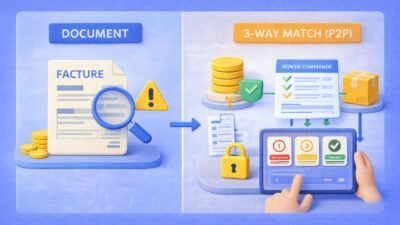
The deployment of three-way matching (PO, receipt, invoice) is fundamental for rigorous management. This automated process compares the purchase order (PO – Purchase Order), the goods or services receipt order, and the supplier’s invoice. If the three documents match, the invoice is automatically validated for payment. In case of discrepancy, the system triggers an exception workflow for investigation and correction. This guarantees that only authorized purchases and properly delivered goods are paid, strengthening expense control.
Finally, it is imperative to centralize invoices and secure access. All invoices, whether electronic or scanned, must be stored in a single, secure repository. An SRM solution like Weproc provides centralized and customizable access, allowing authorized employees to consult relevant documents according to their roles. Securing access is paramount to prevent fraud, data leaks, and ensure GDPR compliance.
The implementation of these tools and processes does not happen overnight. It is often a progressive approach, where the company can choose to automate in stages, relying on best practices and the expertise of specialized software vendors.
Electronic Invoicing, a Strategic Axis for the Company
The adoption of electronic invoicing and the dematerialization of the procurement-accounting chain transcend simple regulatory compliance. They profoundly transform the company, converting processes once perceived as constraints into genuine strategic levers for growth and sustainability.
Dematerialization enables transforming the procurement/accounting department into a value center. Previously confined to administrative and transactional tasks, these departments can now focus on high-value-added missions. Procurement professionals can dedicate more time to procurement strategy, the search for new suppliers, market analysis, and innovation. Accountants, meanwhile, can focus on financial analysis, cash flow optimization, and strategic advice to management. Their role evolves from a “invoice payer” function to that of “strategic partner” who directly contributes to the company’s overall performance.
The optimization of cash flow management and anticipation of non-payments are direct and major benefits. Thanks to real-time visibility of all incoming invoices, their statuses, and deadlines, the company can plan its disbursements with precision. Monitoring tools integrated into SRMs allow detection of cash flow decreases, anticipation of payment delays from its own customers that could impact the ability to pay suppliers, and adjustment of strategies accordingly. Automatic alerts as payment deadlines approach prevent oversights and penalties. This proactivity strengthens the company’s financial health, particularly for SMEs often more sensitive to cash flow difficulties.
Electronic invoicing strengthens regulatory and tax compliance. With the imminent obligation, being in order is essential to avoid sanctions. Modern solutions ensure that issued and received invoices comply with legal standards (EN16931, mandatory information, data integrity and authenticity). Secure and tamper-proof digital archiving ensures document availability in case of tax inspection or accounting audit, simplifying these procedures and reducing compliance risks.
Finally, an aspect often less emphasized, but increasingly crucial, is the reduction of the company’s carbon footprint. Less paper means fewer trees cut, less ink used, less document transportation, and less physical storage space. Dematerialization is fully part of a corporate social responsibility (CSR) approach, demonstrating concrete commitment to sustainable development. This strengthens the company’s brand image with its customers, partners, and employees, a non-negligible asset in the current context.
In short, electronic invoicing, far from being a mere administrative obligation, is a genuine opportunity to modernize the company, improve its operational efficiency, secure its financial processes, and strengthen its business relationships, while contributing to a more sustainable future.
The transition to electronic invoicing by 2026 is a major reform that goes beyond simple regulatory adaptation. It is an invitation to thoroughly rethink supplier invoice management, to abandon costly and risky manual processes in favor of efficient digitized solutions. The benefits are multiple: substantial time and cost savings, increased data reliability, improved cash flow, and strengthened relationships with commercial partners.
To succeed in this transition, rigorous preparation is essential, including an audit of existing processes and the selection of suitable tools. Platforms like Weproc are designed to support companies in this undertaking, offering comprehensive procurement management solutions (SRM) integrating electronic invoicing, OCR, three-way matching, and secure data centralization.
By adopting electronic invoicing, companies are not simply complying with the law; they are acquiring a strategic advantage. They transform their procurement and accounting departments into value centers, optimize their cash flow, strengthen their compliance, and actively contribute to a more environmentally responsible approach. It is a decisive step toward more agile, efficient management geared toward the future.