
The year 2026 marks a major turning point for all French companies subject to VAT, with the progressive implementation of mandatory electronic invoicing. At the heart of this ambitious reform are Certified Platforms (PA), these pivot players that will ensure the fluidity, compliance, and security of invoice exchanges and tax data transmissions. Far from being merely technical tools, CPs are the guarantors of your compliance and the efficiency of your processes.
However, the landscape of Certified Platforms is constantly evolving. Between entities obtaining their final registration, those still “provisional”, and regular updates from the tax administration, it is crucial to have updated and reliable information. Choosing the right platform, or the right combination of platforms, is a strategic decision that will directly impact your financial management, your supplier relationships and your regulatory compliance.
This article aims to provide you with an expert and up-to-date summary on Certified Platforms for electronic invoicing in France. We will decipher their essential role, present the list of players who have obtained final approval, analyze the regulatory framework and the latest developments, and guide you through the key steps to secure your transition to 2026 compliance. Essential reading to anticipate and smoothly equip your company for this transformation.
⏱️ The Essential in 2 minutes
- The obligation to receive electronic invoices will apply to all companies as of September 1, 2026.
- More than 100 platforms have been registered “provisional” by the DGFiP, showing the scale of the market in preparation.
- Approximately 36 platforms have, to date, obtained final approval, validating their technical and regulatory capacity.
What is a Certified Platform (PA) for 2026?
The electronic invoicing reform, though postponed by a year, remains a major challenge for companies. At the heart of this new system lies the concept of Certified Platform (PA), a key player often misunderstood. Understanding precisely what a PA is, its functions and its positioning relative to other market solutions, is essential for any company wishing to approach 2026 with serenity.
Official definition of a Certified Platform (PA) according to the DGFiP
According to the General Directorate of Public Finances (DGFiP), the central authority of the system, a Certified Platform is a private entity (company, group of companies) that has been specifically registered by the State to act as a trusted intermediary in electronic invoice exchanges. Its role is multiple and strictly regulated:
- Emission of compliant electronic invoices: The CP must be capable of generating invoices in the required electronic format (Factur-X, UBL, CII) and making them interoperable with other players in the system.
- Reception of electronic invoices on behalf of companies: It acts as a unique and secure entry point for invoices from your suppliers, ensuring their processing and availability.
- Transmission of invoices and associated data: The CP has the mission to route invoices to the correct destination platform, whether another CP or the Public Invoicing Portal (PPF).
- Submission of e-invoicing and e-reporting data to the tax administration: This is an essential function. The CP extracts the necessary tax data (pre-tax amount, VAT, seller and buyer identifier, etc.) from electronic invoices and transmits them to the PPF. For transactions not subject to electronic invoicing (B2C, international), it collects and transmits transaction and payment data (e-reporting).
In short, a Certified Platform is not a simple invoicing software. It is a regulatory actor, officially integrated into the national system, whose role is to ensure proper implementation of the law and reliable exchanges with the tax administration. Without a CP, no B2B electronic invoice will be able to legally circulate from the dates when obligations take effect.
From PDP to PA: a change in terminology, not substance
Initially, the reform introduced the concept of “Dematerialization Partner Platforms” (DPP). This designation later evolved to become “Certified Platforms” (PA). This change, primarily semantic, aimed to clarify the legal and regulatory status of these actors. The term “certified” emphasizes more the fact that these platforms are officially recognized, controlled and registered by the State, highlighting their role as a trusted third party subject to strict compliance and security requirements. Their fundamental functions and responsibilities remained identical.
Certified Platform (PA) vs. Compatible Solution (CS): a crucial distinction
This is a very common point of confusion, and its clarification is essential to avoid any misunderstanding about legal obligations. It is essential to distinguish the Certified Platform (PA) from the Compatible Solution (CS):
- The Certified Platform (PA): As previously defined, it is directly registered by the DGFiP. It is the one authorized to communicate directly with the Public Invoicing Portal (PPF) and to transmit tax data. It guarantees the legal compliance of flows.
- The Compatible Solution (CS): It is a business tool (an ERP, accounting software, an e-procurement solution like Weproc, point-of-sale software, etc.) that is not certified itself. A CS can prepare invoices, integrate or process them, but it cannot legally transmit them to the PPF or another PA without relying on a Certified Platform in the background. The CS provides data to the PA, which handles interoperability and regulatory compliance.
A compatible solution alone is therefore not sufficient to be in compliance with the reform. It is essential to ensure that your CS is connected to an approved PA for all your B2B flows. This architecture model allows companies to retain their usual business tools while delegating the regulatory and technical complexity of electronic invoicing to a specialized and approved actor.
The relationship between PA and the Public Invoicing Portal (PPF)
The Public Invoicing Portal (PPF) plays a central role but should not be confused with a Certified Platform. The PPF is the public infrastructure, managed by AIFE (Agency for Financial Computing of the State), which provides several essential functions:
- Directory: The PPF hosts a centralized directory of companies and Certified Platforms they have chosen for invoice reception. This directory allows issuing CPs to know which destination CP to send an invoice to.
- Centralization and Transmission: The PPF serves as a pass-through point for invoicing data (e-invoicing) and transaction data (e-reporting) which are then transmitted to the DGFiP for tax audits.
- Minimum exchange platform: The PPF also provides a minimal service for companies that do not wish to go through a private PA, particularly for invoice issuance or reception. However, this option may be limited in terms of features and integration with company internal systems.
Certified Platforms (PA) are the operational daily players that interact directly with company IT systems. They connect to the PPF to exchange invoices and data. The PPF is therefore the public infrastructure for coordination and consolidation of tax information, while the PAs are the technical and regulatory interfaces that manage B2B flows on a daily basis.
The legal obligation to use a PA for B2B flows
It is imperative to emphasize that the use of a Certified Platform (or the PPF directly) will be a legal obligation for all companies subject to VAT for their domestic B2B flows from September 1, 2026. This obligation applies first to invoice reception for all companies, regardless of size. Large and medium-sized enterprises will also have to issue their electronic invoices from this date, before a generalization to all SMEs and small businesses on September 1, 2027.
Failure to comply with this obligation will expose companies to sanctions. The choice and integration of one or more PA in your electronic invoicing architecture is therefore not an option, but an absolute necessity to guarantee the continuity of your activities.
Current status: Number and Status of Certified Platforms
The registration process for Certified Platforms by the DGFiP is a demanding journey, designed to guarantee the reliability and security of the entire electronic invoicing system. This journey unfolds in several stages, resulting in different statuses that it is essential to understand to assess the maturity and actual compliance of solutions offered on the market.
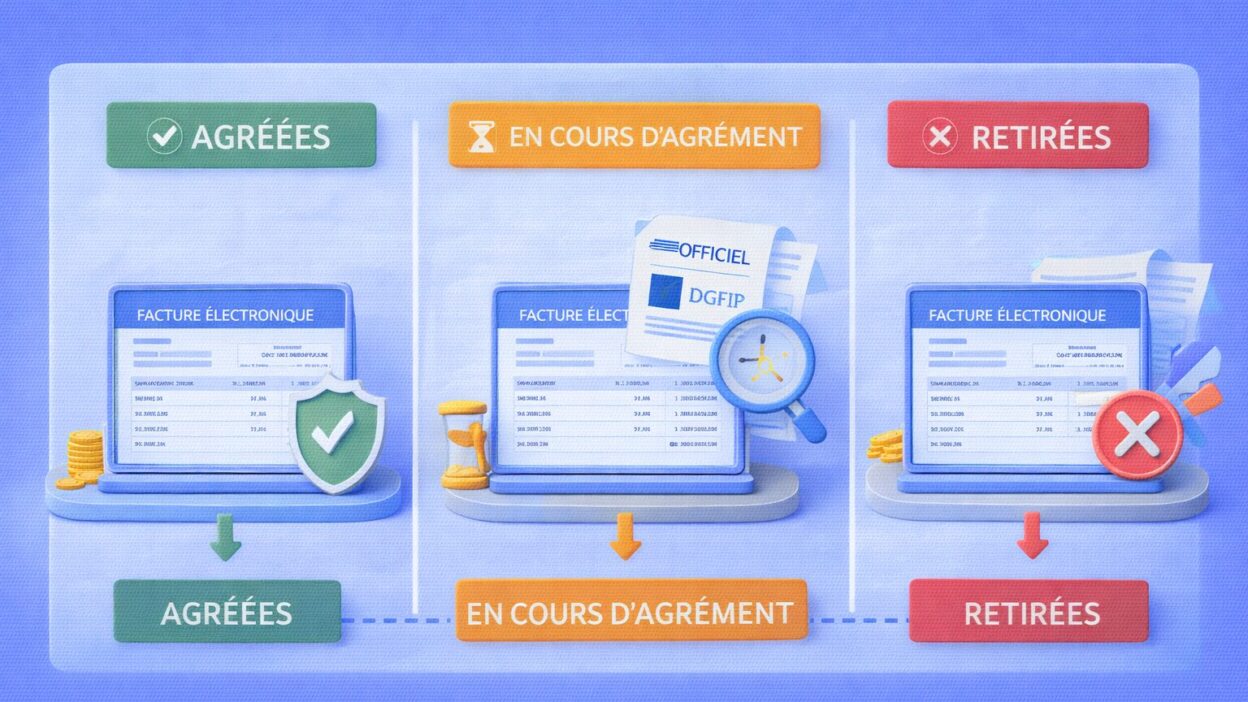
Key figures for the system: more than 100 PA “provisional”, approximately 36 “final”
As the 2026 deadlines approach, the landscape of Certified Platforms is becoming increasingly clear, but remains dynamic. According to the most recent data, communicated by the DGFiP and observed on the market:
- More than one hundred platforms registered provisionally: Currently, approximately 112 platforms have submitted a complete file and have been registered “provisional” by the tax administration. This status indicates that they have validated the first phase of the approval process, demonstrating their administrative compliance, financial strength, ability to secure data and compliance with regulatory obligations. However, they have not yet completed all technical testing.
- Approximately 36 platforms have obtained final approval: Among these provisional registrations, a significant subset has completed all technical steps. Approximately 36 platforms have thus obtained final approval, which means that they have validated interoperability tests with the Public Invoicing Portal (PPF) and are fully operational to manage electronic invoice flows and e-reporting data in full compliance.
These figures highlight market engagement and the willingness of players to position themselves on this segment. However, they also highlight the crucial distinction between provisional and final statuses.
The “provisional” / “final” distinction: the importance of technical testing
The DGFiP approval procedure is bimodal and progressive, ensuring rigorous validation of each platform’s capabilities:
- Registered provisionally: A platform obtains this status after submitting a complete file to the DGFiP. This file must include detailed information about its organization, security processes, privacy policy, solvency, and ability to comply with legal requirements. This is a first administrative and legal validation. At this stage, the platform is “awaiting” the technical phase.
- Final registration: To move from “provisional” to “final”, the platform must pass a series of very strict technical interoperability tests. These tests aim to ensure that the platform can correctly:
- Communicate with the Public Invoicing Portal (PPF).
- Exchange electronic invoices with other PA.
- Correctly extract and transmit e-invoicing and e-reporting data.
- Guarantee the security, integrity and confidentiality of exchanged data.
It is only after validation of these tests that the DGFiP grants final approval, authorizing the platform to operate fully within the reform framework.
For companies, this distinction is crucial. Engaging with a platform still “provisional” carries a significant risk: the solution might not obtain final approval, forcing you to overhaul your invoicing architecture in emergency. Choosing a definitively approved platform provides a guarantee of technical and regulatory compliance, essential for securing your transition.
Consult the official list on impots.gouv.fr: your reference source
Given the proliferation of announcements and players on the market, the only reliable and official source of information is the tax administration website. The DGFiP regularly updates a dedicated page on electronic invoicing, where the official list of Certified Platforms is published, with their precise status (registered provisionally or final approval). It is strongly recommended to consult this page before making any decision regarding your PA choice.
This proactive monitoring will allow you to verify the status of the platform you are considering integrating and to ensure that it meets the current requirements of the DGFiP. Technical validation, materialized by final approval, is the only indicator of real compliance and full capacity to operate within the system.
Official List of Final Certified Platforms (PA)
Final approval is proof that a Certified Platform has passed all validation stages imposed by the DGFiP, including rigorous interoperability testing with the Public Invoicing Portal (PPF) and other PA. This means that these platforms are fully authorized to operate and ensure secure and compliant transmission of your electronic invoices and tax data starting in 2026.
The list below presents a non-exhaustive selection of Certified Platforms that have obtained their final approval, accompanied by indicative functional positioning. This positioning is based on observed market practices and the product DNA of each player (for example, specialization in issuance, reception, accounting, Procure-to-Pay, or EDI interoperability).
Warning: This indicative positioning does not constitute any form of commercial recommendation or regulatory ranking. This is a market reading intended to help companies better orient themselves among the CP offerings.
| Certified Platform (PA) | Primary indicative positioning |
|---|---|
| Weproc | Electronic invoice reception, Procure-to-Pay (P2P), supplier flow orchestration, purchase-side compliance. |
| Qonto | Electronic invoice issuance for SMEs, banking environment integration. |
| Pennylane | SME accounting, integrated issuance and reception. |
| Tiime PDP | Invoicing and accounting for freelancers and SMEs. |
| SPEE SAS (Effinum by SPEE) | Interoperability, tax dematerialization, flow management. |
| Generix Group | B2B exchanges, supply chain, large accounts, EDI. |
| MyKinexo PDP | Professional networks, document intermediation. |
| Sage | ERP / accounting, integrated issuance and reception. |
| Indy | Freelancer accounting, simplified issuance. |
| Digipharmacie | Specialization in healthcare / pharmacy sector. |
| Cegid | ERP, finance, payroll, large volumes. |
| Cegedim | Healthcare data, sector-specific invoicing. |
| Dext | Pre-accounting, document capture and structuring. |
| ECMA | Document dematerialization. |
| Edicom | International interoperability, EDI. |
| Iopole | Tax dematerialization. |
| Serensia (by Quadient) | B2B flows, interoperability. |
| Doxallia | Banking and B2B dematerialization. |
| Cecurity.com | Digital trust, secure flows. |
| Chaintrust | Automated accounting, SMEs. |
| TX2 Concept | EDI and dematerialization. |
| Digital Technologies | Document dematerialization. |
| Gestav | Invoicing and administrative management. |
| Comarch | EDI, international interoperability. |
| Kolekto PDP | SME electronic invoicing. |
| OpenText | DMS, ECM, large groups. |
| Seqino | Invoicing and pre-accounting. |
| Sovos | International tax compliance. |
| Esker | Procure-to-Pay (P2P), Order-to-Cash (O2C). |
| Le Village Connecté | Regional digital services. |
| Docoon | B2B dematerialization. |
| @GP | Document dematerialization. |
| DocProcess | Document management and invoicing. |
| Tessi Technologies | BPO, document processing. |
| EDT | Computerized data exchanges. |
| Esalink | Tax dematerialization. |
| Itesoft | Document capture, finance. |
| Seres | Interoperability, EDI. |
| Transalis Limited | International EDI. |
| Avalara | Indirect tax, B2B VAT compliance. |
| B2Brouter | International e-invoicing. |
| EnerJ | Sector-specific dematerialization. |
| Tradeshift | Supplier networks, interoperability. |
| BabElway | Supplier networks, interoperability. |
Analysis of market trends and functional positioning
Observation of this list reveals several key market trends among Final Certified Platforms:
- An already well-structured market: Despite the 2026 deadline, many historical players in dematerialization, EDI, ERP or accounting have already obtained their final approval. This testifies to their ability to quickly adapt to new regulatory and technical requirements.
- Predominance of issuance, accounting and EDI: Historically, many of these platforms have developed their expertise around customer invoice issuance, accounting integration or structured EDI exchanges. Their offerings are often very solid in these areas.
- A blind spot on reception and Procure-to-Pay (P2P): Paradoxically, the reception of supplier invoices, automated compliance control and Procure-to-Pay flow orchestration remain areas much less covered by all players. Yet this scope concentrates a significant portion of operational risks and optimization challenges for companies, particularly in terms of dispute management, validation workflows and integration with purchasing systems.
It is precisely on this last point that platforms like Weproc distinguish themselves through targeted positioning. By focusing on securing reception and supplier flows through a complete Procure-to-Pay approach, Weproc offers a solution that not only ensures legal compliance, but also aims to optimize the entire lifecycle of the purchase invoice. This is about ensuring that not only is the invoice received legally, but that it is also processed, validated and paid efficiently, without unnecessarily complicating customer issuance which can be managed by another PA or the PPF according to the specific needs of the company.
This positioning illustrates the freedom of choice offered to companies: they can opt for a generalist PA or choose multiple specialized PA to best meet their specific business needs and existing architecture.
Regulatory Framework: What DGFiP Says About Certified Platforms
The Directorate General of Public Finance (DGFiP) is the central driver of the electronic invoicing reform in France. Its role goes far beyond simply defining the regulatory framework; it is the architect, the supervisory authority, and the guarantor of proper implementation of the system. Understanding its role and the directives it issues is essential for any company preparing for 2026.
The DGFiP’s role: central authority, publication, oversight
DGFiP takes on several key roles in the context of electronic invoicing:
- Authority for framework definition: DGFiP develops the regulatory texts (ordinance, decrees, orders, technical specifications) that govern the electronic invoicing obligation, the definition of formats, e-reporting rules, and, of course, the status and missions of Certified Platforms.
- Publication and information organization: DGFiP is the official source of information regarding the reform. It maintains and updates a dedicated section on impots.gouv.fr regarding electronic invoicing, where registered and certified platforms are listed, along with detailed explanatory resources.
- Oversight and control authority: Once accreditation is granted, DGFiP exercises continuous oversight over Certified Platforms to ensure permanent compliance with their obligations. This includes regular audits, flow monitoring, and verification of technical and security compliance.
This central role ensures consistency and reliability of the entire system, providing companies with a clear and secure framework for their invoice exchanges.
The Registration Service for Certified Platforms
To manage the accreditation process, DGFiP has established a Registration Service for Certified Platforms. This dedicated service is responsible for several key missions:
- Review of applications: It receives and evaluates application files from platforms seeking accreditation. This evaluation covers legal, financial, technical, and security aspects.
- Accreditation issuance and renewal: After validation of the various phases (file submission, technical tests), the service issues accreditation for a period of three years, renewable.
- Continuous oversight and monitoring: It ensures follow-up of certified platforms throughout the duration of their accreditation, verifying compliance with regulatory and technical obligations.
- Accreditation withdrawal: In the event of repeated or serious failures to meet obligations, the Registration Service has the power to withdraw accreditation from a platform, rendering it inoperative in the system.
This service ensures that only reliable and compliant platforms are authorized to operate, protecting the integrity of the electronic invoicing system.
The legal timeline: September 1, 2026, the reception obligation
DGFiP has reaffirmed the reform implementation timeline on several occasions. The nearest and most critical milestone for all companies is the following:
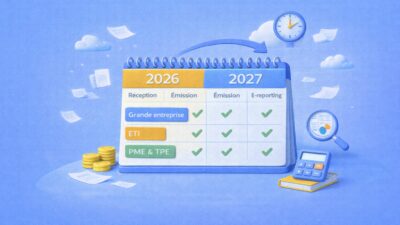
- Starting September 1, 2026: All companies subject to VAT, regardless of size (small, medium, large enterprises), must be capable of receiving compliant electronic invoices via a Certified Platform or the Public Invoicing Portal (PPF).
- Starting September 1, 2026: Large enterprises (GE) and mid-sized enterprises (ETI) will be required to issue their electronic invoices B2B.
- Starting September 1, 2027: Small and medium enterprises (SME) and very small enterprises (VSE) will also be required to issue their electronic invoices B2B.
The reception obligation as of September 1, 2026 is non-negotiable and applies to all companies. It requires preparation now to ensure systems are ready to receive these new flows.
Freedom of choice: one or multiple Certified Platforms for companies
An important aspect of the regulatory framework, often a source of questions, is the freedom given to companies in choosing their Certified Platform(s). DGFiP has clearly indicated that companies can:
- Choose a single Certified Platform: If a platform covers all their needs (issuance, reception, e-reporting, integration with existing systems), a company can opt for a single provider.
- Opt for multiple Certified Platforms: Companies have the ability to use different Certified Platforms for distinct flows. For example, one Certified Platform for issuing their customer invoices and another (potentially more specialized in procurement or Procure-to-Pay processes, like Weproc) for receiving their supplier invoices. This approach can be relevant for:
- Separating purchasing and sales processes.
- Optimizing integration with specific business tools (ERP, P2P solution).
- Leveraging the functional expertise of different platforms.
- Combine Certified Platform and PPF: It is also possible to use the PPF directly for certain flows, for example for reception, while delegating issuance or more complex processing to a Certified Platform.
This flexibility allows companies to adapt their electronic invoicing architecture to their internal strategy, the complexity of their processes, and their existing tools, while strictly respecting DGFiP’s legal requirements.
Summary of DGFiP Framework for Certified Platforms
- DGFiP is the central authority that defines the legal and technical framework.
- A dedicated Registration Service manages accreditation and oversight of Certified Platforms.
- The obligation to receive electronic invoices applies to all companies starting September 1, 2026.
- Companies have the freedom to choose one or multiple Certified Platforms based on their needs.
This legal framework, combined with a clear timeline, forms the roadmap for companies. An in-depth understanding of these elements is essential to anticipate and effectively plan the transformation of their invoicing processes.
Recent News and Evolution of the Certified Platform System
The electronic invoicing system is dynamic and continues to evolve, with regular announcements and accreditations that refine the landscape of Certified Platforms. Following these developments is not a luxury, but a necessity for companies seeking to secure their strategic choices and optimize their transition to 2026 compliance.
Latest final accreditations: Weproc, Serensia, Effinum
Recent months have been marked by the acquisition of final accreditation by several key players, consolidating the list of fully operational platforms:
- December 23, 2025: Weproc obtains its final accreditation as a Certified Platform. This is a major milestone that confirms Weproc’s technical compliance with DGFiP requirements and its interoperability with the Public Invoicing Portal (PPF). This accreditation validates Weproc’s ability to manage all electronic invoice flows and e-reporting data, particularly for reception and supplier management processes via its Procure-to-Pay solution. For organizations, this represents additional assurance to secure their purchasing and invoice reception processes.
- December 11, 2025: Serensia by Quadient receives final accreditation. The Serensia platform, a subsidiary of Quadient, has also announced obtaining its final accreditation. This positions it as a fully validated player to support electronic invoice exchanges and the transmission of tax data, strengthening the market offering.
- December 8, 2025: Effinum by SPEE obtains its final accreditation. Effinum, SPEE’s platform, has finalized its final registration with DGFiP. This validation confirms its full authorization to manage electronic invoice exchanges compliant with the French regulatory framework, demonstrating the growing momentum of final accreditations.
These accreditations are not mere administrative formalities; they are the result of months of work, development, and rigorous testing to ensure perfect integration and flawless compliance. They signal to companies that these solutions are ready and reliable for the coming deadlines.
Opening of the electronic invoicing directory (Oct. 2025) and PPF test environment (Jul. 2025)
Beyond platform accreditations, several important technical and functional milestones have been achieved or are about to be:
- October 18, 2025: Opening of the electronic invoicing directory consultation service. DGFiP and AIFE have made a public directory available. This reference tool is crucial because it allows companies to verify which certified platform (or the PPF) has been designated by their business partners for invoice reception. This is the tool that will ensure that invoices issued reach the right destination. It also allows companies to verify that their own reception platform and their electronic invoicing address are properly registered in preparation for 2026 obligations.
- July 10, 2025: Opening of the PPF interoperability test environment. AIFE has opened a qualification environment for the Public Invoicing Portal (PPF). This technical step is essential because it allowed platforms “provisionally registered” to conduct the necessary interoperability tests to prove their ability to communicate with the PPF and, ultimately, achieve final accreditation. It is a technical prerequisite essential to the generalization of the system.
These successive openings demonstrate the progressive maturation of the system and active preparation by the administration and private actors for the coming deadlines.
Importance of monitoring to secure strategic choices
The momentum around Certified Platforms highlights an essential point: electronic invoicing is not a fixed system. Accreditations evolve, players structure themselves, technical requirements clarify as DGFiP validations proceed and feedback from early testing phases accumulate.
For companies, following this news is not a simple exercise in theoretical monitoring, but a concrete tool for securing future choices. Anticipating means:
- Avoid committing too early to a player still undergoing accreditation, whose status might not be finalized.
- Do not delay a decision when platforms are now definitively validated and can be integrated with full confidence.
- Understand that choosing a platform is part of a broader architecture: issuance, reception, data transmission, and storage do not always address the same challenges and may require distinct approaches.
By relying on a clear and updated understanding of the platform landscape, you can build a coherent trajectory for your company: choose the right platform or platforms, define a robust electronic invoicing architecture, and securely ensure the reception, processing, and storage of your electronic invoices as 2026 approaches.
Process for Adopting a Certified Platform
1. Needs Assessment
Analyze issuance/reception flows, existing systems (ERP, P2P), internal processes, and volumes.
2. Selection of Certified Platform
Consult the official DGFiP list, prioritize definitive Certified Platforms. Evaluate their functional and technical suitability.
3. Integration & Testing
Connect the Certified Platform to internal systems (ERP, P2P). Conduct issuance, reception, and e-reporting tests. Train teams.
4. Progressive Deployment
Gradual or full production rollout based on strategy and regulatory deadlines (from Sept. 2026 for reception).
5. Monitoring & Optimization
Monitor flows, analyze indicators. Keep watch on regulatory changes and continuously optimize processes.
Securing Your 2026 Compliance: Next Steps
The electronic invoicing reform is not a simple technical evolution, but a profound transformation in how companies manage their business relationships and tax obligations. With the deadline of September 1, 2026 for the reception obligation for all companies, the time to act has come. Securing your compliance requires a methodical and proactive approach.
Summarizing key challenges: choice of Certified Platform and invoicing architecture
The challenges are multiple and strategic:
- Legal compliance: The primary concern is ensuring that your B2B invoice issuance and reception processes strictly comply with DGFiP requirements. The choice of a definitive Certified Platform is the cornerstone of this compliance.
- Operational efficiency: Beyond compliance, the reform is an opportunity to optimize your processes. A good Certified Platform, well integrated, can reduce processing times, minimize errors, and automate low-value-added tasks.
- Risk management: A poorly prepared transition can lead to payment delays, supplier disputes, cash flow problems, and tax sanctions. Securing your entire electronic invoicing architecture is therefore paramount.
- Systems integration: Integration of the Certified Platform with your existing systems (ERP, accounting software, Procure-to-Pay solutions, etc.) is a major technical challenge requiring rigorous planning.
These challenges are interdependent. An informed choice of your Certified Platform is not limited to its ability to transmit invoices, but to its ability to integrate seamlessly into your information ecosystem and support your business objectives.
Encouraging anticipation to avoid tooling errors
The postponement of the deadline to 2026 should not be seen as a reprieve for procrastination, but as a precious opportunity to anticipate and best prepare your transition. Waiting until the last minute exposes you to major risks:
- Lack of resource availability: Integrators and technical teams of Certified Platforms will be heavily solicited as the deadline approaches. Anticipating guarantees access to the best resources.
- Hasty decisions: A decision made under pressure can lead to an unsuitable solution, generating additional costs and operational problems.
- Unoptimized processes: Integration of a Certified Platform is not limited to a technical connection; it often involves a review and optimization of internal processes (validation workflows, dispute management, etc.), which takes time.
Start now by auditing your current invoicing flows, identify your specific needs, and explore available solutions.
Recommending building a coherent and robust trajectory
Rather than a simple migration, approach electronic invoicing as a global transformation project. This involves:
- Establish a strategic plan: Define your target architecture (one or multiple Certified Platforms, PPF integration, compatible solutions), your internal timeline, and each team’s responsibilities.
- Prioritize critical flows: Focus first on the reception obligation, which affects all companies, then on issuance depending on your size and constraints.
- Involve all stakeholders: Purchasing, Finance, Accounting, IT, and Legal departments must work together to ensure a smooth and secure transition.
- Test and iterate: Take advantage of test environments (such as the PPF) to validate your choices and adjust your processes before actual production deployment.
A coherent trajectory minimizes risks and maximizes the potential benefits of the reform, transforming a regulatory constraint into a lever for efficiency.
Proposing to evaluate specific solutions (e.g.: reception, P2P)
Facing the diversity of offerings, it is crucial to evaluate solutions based on your actual business needs. If your company has particularly significant challenges regarding supplier management, the automation of your purchasing processes, or securing the reception and processing of your invoices, it is wise to turn to Certified Platforms with recognized expertise in these areas.
Solutions like Weproc, for example, are specifically designed to address these challenges. As a Certified Platform and complete Procure-to-Pay solution, Weproc does more than ensure compliance with your electronic invoice reception; it also allows you to orchestrate all your supplier flows, from purchase requisition to invoicing, including orders and goods receipt notes. This integrated approach ensures not only regulatory compliance, but also significant optimization of your costs and purchasing processes.
Take time to evaluate Certified Platforms not only on their ability to communicate with the PPF, but also on their functional added value for your key departments. It is by aligning the technical solution with your strategic objectives that you will transform this obligation into a real performance opportunity.
The countdown to 2026 has begun. By staying informed, anticipating, and choosing the right partners, your company can not only comply with the new electronic invoicing requirements, but also gain a lasting competitive advantage.