
With the gradual implementation of mandatory electronic invoicing, the B2B commercial exchange landscape is undergoing a major transformation. At the heart of this reform, the question of electronic invoice formats becomes paramount. Among the solutions officially recognized by the tax administration, the Factur-X format stands out as a particularly relevant, even ideal, response for many SMEs and Mid-caps.
Often perceived as a technical concept, Factur-X is actually an innovation designed to reconcile ease of use with advanced automation. It represents a bridge between traditional practices and the modern requirements of digitalization. Combining the readability of a PDF we all know with the intelligence of XML structured data, Factur-X offers a hybrid approach that facilitates the transition toward compliance without disrupting working habits.
This expert article aims to demystify Factur-X, explain its central role in the 2026 regulatory framework, and highlight its concrete advantages. We will explore how this format can not only ensure your company’s compliance but also optimize your financial processes, particularly within a structured Procure-to-Pay approach. Understanding Factur-X means anticipating tomorrow’s challenges to transform a regulatory obligation into a true performance lever.
⏱️ The Essentials in 2 minutes
- Factur-X is a hybrid electronic invoice format (PDF for humans, XML for machines), official and compliant with the European standard EN 16931.
- It is one of the three recognized formats for mandatory B2B electronic invoicing in France starting in 2026, offering a balanced solution between readability and automation.
- Its adoption, facilitated by Accredited Platforms (PA), enables not only compliance but also significant optimization of financial processes (Procure-to-Pay), reducing errors and delays.
Understanding Factur-X: A Hybrid Solution for 2026
As electronic invoicing prepares to become the norm, it is essential to master the formats that underpin it. Factur-X distinguishes itself through its innovative approach, combining the best of both worlds to offer a robust and accessible solution.
What is the Factur-X format?
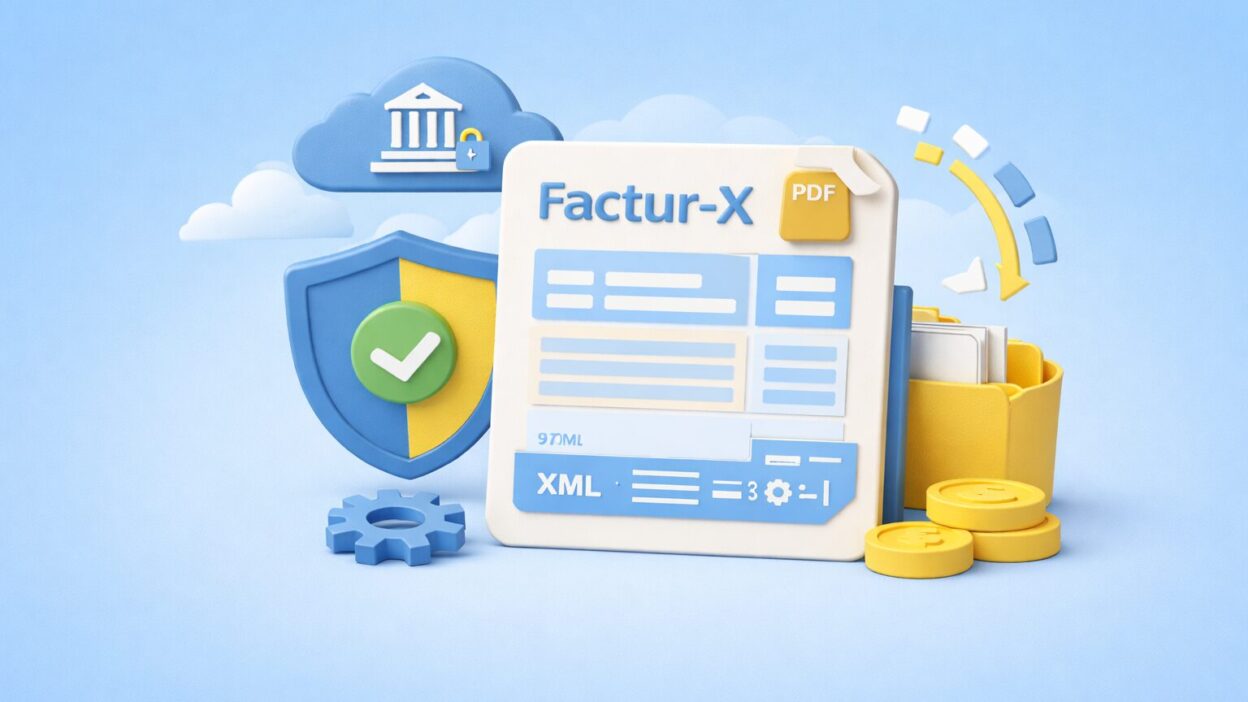
Factur-X is a hybrid electronic invoice format, specifically designed to meet the requirements of digitalization while preserving ease of reading. Officially recognized by the French tax administration and compliant with the European standard EN 16931, it embodies a future-proof solution for B2B invoice exchange. This unique format combines two crucial elements into a single file:
- A classic PDF (Portable Document Format) document, readable by the human eye and identical to a traditional paper invoice. This PDF ensures that any person can open, read, and understand the invoice without requiring specific software.
- A structured data file in XML (eXtensible Markup Language) format, embedded within the PDF and invisible to the user without a suitable tool. This XML file contains all invoice information in a structured manner, making it directly usable by information systems (ERP, accounting software, procurement management solutions).
This technical ingenuity is the result of Franco-German collaboration, launched in 2017 by the FNFE-MPE (National Forum for Electronic Invoicing and Public Procurement) on the French side and its German equivalent, FeRD. Factur-X is, in essence, the French implementation of the ZUGFeRD 2.1 format, widely used across the Rhine. This dual-nation origin and its compliance with the European standard EN 16931 guarantee its robustness, compatibility, and compliance with the most demanding regulatory frameworks of the European Union.
The underlying objective behind the creation of Factur-X was clear: to facilitate the transition to mandatory electronic invoicing for as many companies as possible by offering a solution that sacrifices neither readability for the end user nor automation for IT systems. It thus allows financial teams to quickly visualize and understand the content of an invoice while giving software the ability to process data automatically, eliminating time-consuming and error-prone manual re-entry tasks.
Factur-X is not just a simple PDF
It is crucial to clear up any ambiguity: sending a PDF by email, even if it is a scanned image of an invoice or a generated PDF, does not constitute an electronic invoice under the new regulations. A “classic” PDF is a visual document, but its data is not natively structured to be automatically used by a machine without complex and often imperfect OCR (Optical Character Recognition) processes.
Factur-X, on the other hand, transcends the simple status of a visual PDF thanks to the integration of its structured XML component. It is this duality that makes it an intelligent format eligible for the 2026 reform. Here are the fundamental distinctions:
- Structured and standardized data: Unlike a classic PDF, Factur-X contains an XML file where all key invoice information (identifiers, amounts, VAT, order lines, etc.) is organized according to precise and standardized semantics. This allows for unambiguous reading and interpretation by IT systems.
- Advanced automation capabilities: Thanks to its XML data, Factur-X enables high-level process automation. Accounting and management software can directly extract the information needed for recording, reconciliation with purchase orders or delivery notes, and archiving, without human intervention. This drastically reduces the risk of entry errors and speeds up processing.
- Control and traceability: The standardized structure of Factur-X facilitates both internal and external compliance checks. Accredited platforms and the tax administration can verify the integrity and validity of the data. Every transaction is traceable, ensuring a better audit trail.
- Compatibility with accredited platforms: Factur-X is designed to integrate perfectly with the ecosystem of Accredited Platforms (PA). These platforms are the mandatory intermediaries for transmitting electronic invoices in the new system. A classic PDF sent by email is not compatible with this official circuit and will therefore be rejected.
- Eligibility for the 2026 reform: This is the most important distinction. While an unstructured PDF will be prohibited for mandatory B2B exchanges, Factur-X is fully eligible and represents one of the preferred routes to meet new tax and regulatory requirements.
In short, Factur-X is much more than an image of an invoice. It is an intelligent data container, optimized for machine-to-machine interactions while remaining understandable by humans. It is this power and flexibility that make it a pillar of the future invoicing reform.
Formats recognized by the tax administration
The electronic invoicing reform in France aims to standardize and secure exchanges. To achieve this, the tax administration has clearly defined the electronic invoice formats that will be officially accepted for B2B transactions starting in 2026. This list is restricted and constitutes the technological foundation on which the new system will rest.
Three formats are currently recognized as eligible:
- Factur-X: The hybrid format we have just detailed, combining a readable PDF and a structured XML file. Its hybrid nature makes it a preferred choice for companies seeking to combine simplicity of adoption and progressive automation.
- UBL (Universal Business Language): A purely XML format, very widespread internationally, particularly in B2G (Business to Government) exchanges and large companies. UBL is an open and flexible standard, allowing for full process automation for organizations with high digital maturity.
- CII (Cross Industry Invoice): Also a purely XML format, CII is a standard from UN/CEFACT (United Nations Centre for Trade Facilitation and Electronic Business). Like UBL, it is oriented toward full automation and is often used in complex Electronic Data Interchange (EDI) environments.
The choice between these three formats will intrinsically depend on each organization’s specificities, its maturity level regarding digitalization, its existing information systems, and its business partners. It is not about choosing the most complex format, but the one best suited to your needs and integration capabilities.
| Format | Description | Main Target |
|---|---|---|
| Factur-X | Hybrid (Readable PDF + Structured XML) | SMEs/Mid-caps seeking balance between readability and automation |
| UBL | Purely XML | Large companies, B2G exchanges, high EDI maturity |
| CII | Purely XML | Large companies, highly industrialized exchanges |
Factur-X clearly positions itself as the most accessible format for a large majority of companies. Its ability to offer both a familiar human interface and machine-usable data makes it a strategic choice for a smooth and efficient transition to mandatory electronic invoicing. UBL and CII formats, while high-performing for large-scale automation, generally require larger investments in terms of integration and adaptation of information systems.
Factur-X at the heart of the 2026 invoicing reform
The electronic invoicing reform is more than just an evolution; it is a profound mutation of how companies exchange financial documents. Factur-X is intrinsically linked to this transformation, offering a clear path toward compliance.
Integration into the mandatory framework
The French electronic invoicing reform, whose application is planned between 2026 and 2027, introduces an obligation for all VAT-registered companies to issue and receive their B2B invoices in a structured electronic format. Factur-X is one of the formats that fully meets this requirement, confirming it as an essential pillar of the framework.
Specifically, the integration of Factur-X into this new framework means that an invoice generated in this format is legally compliant to circulate within the official circuit. The transmission process will be structured as follows:
- Issuance: The issuing company generates its Factur-X invoice (PDF + XML).
- Transmission via PA: This invoice is then transmitted via an Accredited Platform (PA) of its choice, or via the Public Invoicing Portal (PPF).
- Transmission to tax administration: The PA (or PPF) extracts key data from the invoice and transmits it to the tax administration for VAT purposes and pre-filled reporting.
- Reception by the client: The Factur-X invoice is then routed by the issuing PA to the client’s PA or directly to the PPF, and finally to the client’s information system.
The goal of this scheme is twofold: to ensure tax compliance by centralizing data for the State, and to promote process automation for companies. Factur-X, thanks to its hybrid structure, excels at reconciling these two requirements. The PDF remains accessible to employees for direct visualization and human control, while the XML allows for automatic and reliable integration into accounting and procurement management systems.
This adaptability makes Factur-X particularly valuable for SMEs and Mid-caps. They can thus comply with new obligations without having to undertake digital transformation projects that are too complex or costly, often associated with purely XML formats. The ability of Factur-X to naturally fit into existing flows minimizes operational disruptions and accelerates the adoption of electronic invoicing nationwide.
Factur-X Profiles: Choosing the Right Level of Detail
The Factur-X format does not offer a single, monolithic solution, but adapts to specific company needs through a system of “profiles.” These profiles define the level of detail and structuring of the XML data integrated into the invoice. The existence of several profiles is a strength, as it allows each company to choose the complexity level that best matches its internal processes and integration capabilities without imposing unnecessary sophistication.
Why this modularity? Not all companies have the same requirements. A small structure with simple invoices will not have the same automation needs as a large group with complex purchasing and payment processes. Factur-X profiles thus allow for a gradual commitment to digitalization, offering precious flexibility.
Here are the main Factur-X profiles, ranked by increasing level of detail:
| Factur-X Profile | Description and Key Data | Recommended Use Case |
|---|---|---|
| MINIMUM | Contains essential info: issuer/receiver identity, invoice number and date, total amounts, VAT. | Very simple scenarios, or minimum requirements for certain B2G cases. |
| BASIC WL (Without Lines) | Adds more detail than MINIMUM, but without invoice line details. Improves understanding of global amounts. | First desired level of automation, without fine management of items or services invoiced. |
| BASIC | Includes basic info and full detail of invoicing lines (products, services, quantities, unit prices). | Often the recommended minimum for SMEs/Mid-caps. Allows for efficient accounting automation and reconciliation with purchase orders. |
| EN 16931 | Implements the full set of data defined by the European standard EN 16931. Includes detailed VAT info, precise calculation rules, and handles more complex invoicing cases. | Companies with cross-border exchanges within the EU or reinforced regulatory needs. |
| EXTENDED | The most advanced level, allowing for management of very complex scenarios: multiple delivery locations, specific commercial conditions, particular business rules, etc. | Large organizations with highly structured processes and very specific data needs. |
For the majority of French SMEs and Mid-caps, the BASIC profile represents the right balance. It offers efficient automation and regulatory compliance without excessive complexity, allowing for automatic reconciliation with orders and smooth accounting integration. More advanced profiles should only be considered if internal processes or partner requirements clearly justify them.
It is important to note that all these profiles are recognized as compliant within the framework of the 2026-2027 reform. The choice is therefore not about compliance itself, but about the desired level of information and automation. Good guidance from an expert or an accredited platform is crucial to determine the most relevant profile for your organization.
For which companies is Factur-X ideal?
Given the diversity of electronic invoicing formats, questioning the suitability of Factur-X is legitimate. The hybrid format proves particularly ideal for a specific category of companies: SMEs (Small and Medium Enterprises) and Mid-caps (Middle-Market Companies).
Why is Factur-X so well suited to these structures?
- Balance between readability and automation: SMEs and Mid-caps often have financial teams still accustomed to working with visual invoices. Factur-X allows them to continue visualizing a familiar PDF document while benefiting from automation advantages thanks to XML data. This balance minimizes resistance to change and facilitates internal adoption.
- Standard invoicing processes: This format is perfectly suited to companies whose invoicing processes are relatively standardized, without the need to manage thousands of ultra-specific business rules or extreme exchange volumes. It covers the vast majority of common use cases.
- Facilitated integration with existing systems: Many SMEs/Mid-caps use “off-the-shelf” ERP or accounting software or intermediate solutions. The structured but accessible nature of Factur-X makes its integration and data utilization simpler than purely XML formats which would require significant specific development. Digitalization operators are often equipped to generate or read Factur-X easily.
- Heterogeneity of partners: SMEs/Mid-caps often work with an ecosystem of suppliers and clients whose digital maturity can vary greatly. Factur-X is a “common language”: even if a partner is not yet fully automated, they can still read the PDF, while those who are can use the XML. This avoids imposing too heavy constraints on the entire value chain.
Comparison with other formats:
- Unlike purely EDI (Electronic Data Interchange) formats which require heavy and costly technical infrastructure, Factur-X is more agile. EDI is often reserved for very large groups with massive transaction volumes and highly structured partnerships.
- Compared to UBL or CII, Factur-X retains the advantage of human readability. UBL and CII are 100% structured formats, excellent for full automation, but unreadable without technical tools, which can create a barrier for end-users and requires a deeper overhaul of processes.
In summary, Factur-X is not a default compromise, but an informed strategic choice for SMEs and Mid-caps. It allows them to embrace the electronic invoicing reform not as a complex technical constraint, but as an opportunity to optimize their operations, guarantee their compliance, and fluidify their exchanges with controlled investment.
Implementing Factur-X: Issuance, Reception, and the Role of Platforms
The transition to Factur-X and mandatory electronic invoicing in 2026 does not necessarily involve an internal technological revolution. The key lies in adopting the right tools and partners to ensure the compliance of issuance and reception processes.
How to issue Factur-X invoices
The issuance of invoices in Factur-X format falls within the new electronic invoicing framework. The process aims to be as transparent as possible for the company by relying on digitalization solutions. Here are the key steps:
Factur-X Invoice Issuance Process
1. Invoice Generation
The company produces its invoice via its ERP, management tool, or usual invoicing solution, with all mandatory legal mentions.
2. Conversion to Factur-X
The invoice is converted to Factur-X (adding XML data to the PDF). This step is generally automated by software or a platform.
3. Transmission via PA or PPF
The Factur-X file is sent to an Accredited Platform (PA) or directly to the Public Invoicing Portal (PPF).
4. Routing and Tax Declaration
The PA/PPF routes the invoice to the recipient and transmits tax data to the administration.
For most companies, this conversion and transmission will be handled by an external provider or an updated existing software solution:
- Your current management software (ERP, invoicing): Many software publishers are working to integrate Factur-X generation directly into their tools, allowing companies to continue working in a familiar environment.
- An electronic invoicing platform: These platforms are specifically designed to manage the lifecycle of electronic invoices, including generation, conversion, and transmission in compliant formats.
- A digitalization operator (OD): These providers are experts in digitalization who can handle the entire process, from transforming your data into Factur-X to routing it via PAs (Ex-PDP).
The challenge is therefore not to reinvent how you invoice, but to ensure that the output of your process is a valid Factur-X, routed through an accredited channel. Selecting a reliable and compliant partner is an essential step to guarantee seamless invoice issuance.
How to receive Factur-X invoices
The 2026 reform does not only concern issuance, but also mastering the compliant reception and storage of invoices. From this date, all companies must be able to receive electronic invoices, including those in Factur-X format, via the official digitalization circuit. This marks the end of receiving invoices by simple email, whether they are unstructured PDFs or scanned images.
To receive Factur-X invoices, a company must absolutely:
- Have an accredited reception point: This involves being connected to an Accredited Platform (PA) or the Public Invoicing Portal (PPF). This is how all B2B electronic invoices will be routed to you securely and compliantly. Your PA will act as your official “electronic mailbox.”
- Be able to utilize the invoice: Once the Factur-X is received, your information system must be able to:
- Display the PDF: So your operational and financial teams can visualize the invoice like any traditional document.
- Utilize the structured XML data: To automate internal processes, such as reconciliation with purchase orders, accounting integration, control of mandatory mentions, and archiving.
The added value of Factur-X at reception is considerable. No more costly and error-prone manual re-entries. XML data allows for direct and rapid integration into your ERP or accounting software, drastically reducing processing time for supplier invoices and accelerating payment cycles. This also contributes to better cash management and increased expense control.
Anticipating this new reality for reception is just as important as preparing for issuance. The choice of your receiving PA will directly influence the fluidity and efficiency of your internal supplier invoice management processes.
The central role of Accredited Platforms (PA)
In the new electronic invoicing framework, Accredited Platforms (PA) are not just technical providers; they constitute the cornerstone of the system. Their role is central and multifunctional, ensuring intermediation between companies and the tax administration.
PAs are private operators, registered with the tax administration, whose mission is to:
- Ensure format compliance: They verify that issued invoices respect accepted formats (including Factur-X, UBL, CII) and contain all mandatory legal mentions.
- Transmit invoices: They route electronic invoices from the issuer’s platform to the receiver’s, ensuring secure and reliable document circulation.
- Extract and transmit data to the tax administration (e-reporting): PAs extract the invoicing data required by the State and transmit it to the Public Invoicing Portal (PPF), which centralizes this info for pre-filled VAT declarations and e-reporting.
- Guarantee integrity and security: They implement robust security mechanisms to protect data and ensure invoices are not altered.
- Offer value-added services: Beyond legal obligations, many PAs offer complementary services like legal archiving, automatic reconciliation, payment tracking, dispute management, etc.
The choice of your Partner Digitalization Platform(s) is a major strategic decision. It will impact not only your compliance but also the efficiency and fluidity of your entire invoicing, purchasing, and accounting processes. It is essential to select a PA whose services match your needs, offers good interoperability with your internal systems, and demonstrates solid expertise in the field.
The tax administration has set up a directory of registered PAs, which will be regularly updated. Relying on a reliable and recognized PA is the best guarantee of a serene and successful transition to mandatory electronic invoicing in 2026.
Factur-X, a performance lever in Procure-to-Pay
The impact of Factur-X goes far beyond simple regulatory compliance. Strategically integrated, it becomes a true performance accelerator for the entire Procure-to-Pay (P2P) cycle, from order to payment.
Integrating Factur-X into a structured P2P process
The Procure-to-Pay (P2P) cycle is the complete journey of an expense, from expressing the need to its payment. In a structured and optimized P2P, every step is managed logically and integrated: the purchase request, issuance of the purchase order, reception of goods or services, invoice verification, and finally, payment. It is in this context that Factur-X reveals its full potential.
The Factur-X format acts as an intelligent lubricant for this chain. Thanks to its structured XML data, it facilitates automatic and reliable reconciliation between different P2P cycle documents:
- Order/Invoice reconciliation: Information contained in the Factur-X XML (order number, item references, quantities, unit prices) can be automatically compared to initial purchase order data. In case of a perfect match, the invoice can be validated without manual intervention.
- Reception/Invoice reconciliation: If a reception slip was issued, Factur-X data can also be reconciled with this document to confirm the correct delivery of goods or execution of services. This allows verifying that what is invoiced matches what was ordered and received.
The benefits of this automatic reconciliation are multiple:
- Reduction of manual re-entries: Data is extracted directly from the invoice XML and injected into the management system, eliminating the need to manually enter information—a frequent source of errors and delays.
- Decrease in supplier disputes: By quickly identifying discrepancies between order, reception, and invoice, Factur-X allows for handling anomalies upstream. Price, quantity, or reference errors are detected instantly, reducing friction with suppliers and speeding up problem resolution.
- Acceleration of the payment cycle: Faster and error-free invoice processing means payments are made on time, or even earlier if discounts are negotiated, improving supplier relations and company cash flow.
- Improved data reliability: Automation reduces human intervention and thus the risk of errors, guaranteeing more reliable financial data for management and analysis.
By integrating Factur-X at the heart of an equipped P2P process, companies don’t just achieve compliance; they transform their expense management into a controlled, efficient, and secure flow, thereby strengthening their operational and financial performance.
Improving commitment control
In a modern Procure-to-Pay approach, the invoice is no longer the starting point for control, but the confirmation of a commitment already validated upstream. Factur-X reinforces this preventive control logic and secures the entire budgetary process.
Historically, receiving an invoice might have been the first alert regarding an expense. With Factur-X and a structured P2P, this dynamic is reversed:
- The invoice as confirmation of commitment: The decision to buy is made well in advance, often formalized by a purchase order and budgetary validation. The invoice that arrives later is only the realization of this commitment. Thanks to the Factur-X XML, it becomes simple to verify that this confirmation accurately matches what was initially decided.
- Automated pre-payment compliance verification: Before any payment, Factur-X allows for the automation of crucial checks. The system can instantly verify if the invoice amount matches the purchase order, if the items invoiced are those planned, if payment terms are respected, and if VAT is correctly applied. Any discrepancy is immediately flagged, allowing for rapid intervention before payment is made.
- Upstream budgetary security: By integrating Factur-X into a P2P, the company gains increased visibility into its expenses from the commitment phase. Budgets are better tracked, and overspending risks are identified and managed proactively. Factur-X’s ability to provide reliable and usable data allows for building real-time dashboards on commitments and budget consumption.
This proactive approach to commitment control, made possible and more efficient by Factur-X, brings precious peace of mind to financial departments. They can ensure that every euro spent is aligned with company strategy and allocated budgets, thus reducing risks of fraud, costly errors, and unplanned expenses. The hybrid format doesn’t just make invoices readable; it makes them intelligent and active in the control process, transforming the finance function from a reactive role to a truly strategic and proactive one.
Fluidity and increased visibility for finance
The integration of Factur-X into a structured Procure-to-Pay ecosystem generates considerable benefits for all company stakeholders, with a particularly positive impact on the finance function. Beyond compliance gains, Factur-X acts as a catalyst for smoother, more transparent, and more strategic financial management.
For operational teams and employees involved in the purchasing circuit:
- Simplification of tasks: Invoice management becomes less of an administrative chore. Invoices are processed faster, with fewer manual interventions and complex validations, freeing up time for higher value-added tasks. The readability of the Factur-X PDF ensures that even without access to accounting tools, teams can verify invoice content.
- Reduction of friction points: Disputes with suppliers are minimized thanks to automatic reconciliation and early detection of anomalies. This improves commercial relations and reduces internal frustrations related to payment blocks.
For the accounting function:
- Control automation: Factur-X XML data allows for high-level automation of accounting controls. Postings, VAT calculations, and verification of mandatory mentions can be pre-configured and executed automatically, guaranteeing greater reliability and a reduction in human error.
- Accelerated accounting closures: With faster and more precise invoice processing, monthly or annual closures are considerably accelerated. Data is available in real-time, avoiding delays and last-minute adjustments.
For the Administrative and Financial Management (CFO/DAF):
- Reliable and real-time view of expenses: The finance department has a consolidated and precise view of all committed and upcoming expenses. Thanks to structured data, it’s possible to create dynamic dashboards, track budgets with fine granularity, and anticipate cash flows with greater accuracy.
- Improved strategic management: Freed from repetitive operational tasks, the finance department can focus on data analysis, cost optimization, risk management, and strategic planning. Factur-X provides the raw material (reliable and structured data) for informed decision-making.
- Cash flow mastery: Better visibility on incoming and outgoing flows, combined with optimized supplier payment management, allows for finer and more proactive cash management—a vital issue for the financial stability of any company.
Ultimately, Factur-X is not a simple technical constraint; it is a powerful lever to transform the finance function. It makes it more agile, more responsive, and more strategic, allowing it to move from a “bookkeeper” role to that of a true partner for company growth and performance.
Factur-X Compliance: 2026 Challenges and Risks
The adoption of Factur-X is a process at the heart of the 2026 reform’s legal obligations. Non-compliance with these requirements can lead to significant consequences, which are crucial to anticipate.
Factur-X and strict regulatory compliance
The Factur-X format is officially recognized by the French tax administration, giving it unquestionable legitimacy within the framework of the 2026-2027 electronic invoicing reform. However, its use to be fully compliant is not limited to simply generating a file with a Factur-X extension. It must be part of a set of strict regulatory requirements.
For a Factur-X invoice to be considered compliant, several points are essential:
- Respect of mandatory legal mentions: Like any invoice, a Factur-X must contain all legal mentions imposed by the General Tax Code and the Commercial Code (invoice number, date, identity of seller and buyer, description of products or services, price, VAT, etc.). This information must be present and consistent in both the readable PDF and the structured XML data.
- Consistency of XML data with the PDF: One of Factur-X’s major assets is its hybrid nature. It is imperative that information presented visually in the PDF exactly matches data encoded in the XML file. Any inconsistency could invalidate the invoice or complicate its processing.
- Transmission via the official circuit: A compliant Factur-X must be transmitted through an Accredited Platform (PA) or the Public Invoicing Portal (PPF). Sending directly by email, even of a valid Factur-X, will not be accepted as a compliant transmission method starting in 2026. Respecting this circuit guarantees the traceability and security of exchanges.
- Integrity and authenticity: The invoice must guarantee its integrity (its content has not been altered) and its authenticity (its issuer is identifiable). PAs play a key role in this security through technical processes (electronic signature, timestamping, etc.).
Respecting these requirements is not only a legal obligation but also a guarantee for the company itself. A correctly generated and transmitted Factur-X facilitates tax audits, secures VAT deductibility, and ensures the legal validity of commercial transactions. Failure to comply means exposure to significant risks.
Sanctions in case of non-compliance
The electronic invoicing reform is accompanied by a precise legal framework and sanctions for failure to meet obligations. It is imperative for companies to understand these risks to anticipate and avoid costly and damaging consequences.
The main risks in case of non-compliance with electronic invoicing requirements and the use of unauthorized formats are as follows:
- Fines per non-compliant invoice:
- For issued invoices: The issuing company risks a fine of €15 per non-compliant invoice (i.e., not issued in electronic format or via the accredited channel).
- For received invoices: The receiving company risks a fine of €15 for each invoice not received electronically (for example, if it accepts a simple PDF by email when it should receive a Factur-X via a PA).
- Annual caps: These fines are capped at €15,000 per calendar year for issued invoices and €15,000 per calendar year for received invoices. While these caps may seem high, they can be quickly reached for companies with high invoicing volumes.
- Fines for non-transmission of data (e-reporting): A fine of €250 per invoice is planned for non-transmission of transaction data or non-compliance with the transmission schedule to the tax administration (e-reporting), capped at €15,000 per calendar year.
- Increase in tax audits: The electronic invoicing system is an opportunity for the tax administration to automate and intensify its controls. Non-compliant companies or those with repeated irregularities will be more likely targets for in-depth audits.
- Operational consequences: Beyond financial fines, non-compliance can lead to significant operational disruptions:
- Invoice rejections: Non-compliant invoices risk being rejected by platforms or partners, leading to payment delays or even commercial disputes.
- Payment blocks: If the integration of supplier invoices into accounting systems is compromised, payment cycles may be lengthened, impacting company cash flow and reputation.
- Process disorganization: The need to manage compliant invoices on one side and non-compliant ones on the other can complicate and disorganize financial and administrative processes.
- Loss of right to VAT deduction: A non-compliant invoice could call into question the company’s right to deduct the related VAT, leading to a potential tax adjustment.
The consequences of non-compliance are therefore multiple, affecting company finances, operations, and reputation. This is why the early and rigorous adoption of formats like Factur-X, and connection to reliable PAs, are not an option but a strategic necessity to secure activity starting in 2026.
Anticipating to secure invoicing flows
Faced with compliance challenges and the risk of sanctions related to electronic invoicing, the wisest approach for companies is anticipation. Waiting until the last minute to comply would be a perilous strategy, potentially generating stress, unforeseen costs, and disorganization.
The early adoption of Factur-X and commitment to invoicing process transformation represent a proactive approach that offers multiple advantages:
- Securing flows against fines: By setting up Factur-X compatible solutions and connecting to a PA well before the 2026 deadlines, companies ensure their invoicing flows will be compliant from day one of the obligation. This eliminates the risk of fines and administrative blocks.
- Serene project management: Implementing electronic invoicing, even with an “easy” format like Factur-X, requires system adaptation, team training, and communication with partners. Anticipating allows for planning these steps without haste, performing tests, adjusting processes, and solving any problems in a calm environment.
- Progressive transformation: Rather than being forced into a brutal switch, companies can opt for a gradual transition, integrating Factur-X first with a small number of partners or for certain transaction types, then extending use as confidence and mastery increase.
- Positioning as a reliability accelerator: Being among the first companies to adopt a compliant format and master electronic invoicing sends a positive signal to business partners. It strengthens the company’s reputation as a reliable, modern, and compliance-conscious actor.
- Immediate operational gains: Even before the obligation, using Factur-X via an accredited platform can generate efficiency gains. Treatment automation, error reduction, and payment cycle acceleration are not benefits that only appear in 2026; they can be capitalized on right now.
Factur-X is much more than a simple regulatory requirement to bend to. It is a tool that, if adopted and integrated strategically, becomes a true lever to improve the reliability of financial processes, strengthen compliance, and position the company on the path to sustainable performance. Anticipation is not a simple recommendation; it is a strategic necessity to calmly approach the challenges and opportunities of 2026.
Factur-X, a strategic choice for optimized finance
The electronic invoicing reform in 2026 represents a major structural change for all French companies. At the heart of this transformation, the Factur-X format positions itself not only as a catalyst for compliance but also as a powerful optimization lever for the finance function. It is time to consider Factur-X not as an additional constraint, but as a strategic opportunity to be seized.
Going beyond simple compliance
The adoption of Factur-X should not be seen as just a regulatory box to check. Certainly, it guarantees compliance with tax administration requirements and secures companies against the risk of sanctions. However, its benefits go far beyond this legal imperative. Factur-X is a structuring foundation for more modern and efficient financial management:
- Increased automation: Thanks to its structured XML data, Factur-X automates a large part of the manual tasks related to invoice processing, from reception to accounting integration. This frees up time for teams, reduces errors, and speeds up processes.
- Data reliability: Standardizing information and automatic reconciliation with purchase orders and delivery notes guarantee better financial data integrity, essential for informed management and strategic decision-making.
- Optimized financial management: Real-time visibility into invoicing flows and commitments allows the Finance Department to move from reactive to proactive cash and budget management.
- Ease of adoption: Its hybrid nature, combining the readability of a PDF and the usability of an XML, greatly facilitates its adoption by SMEs and Mid-caps, avoiding heavy overhauls of information systems.
By choosing Factur-X, companies opt for a sustainable format in line with European standards and perfectly compatible with the ecosystem of Accredited Platforms (PA), which will be the preferred exchange channel. It is a choice that not only ensures flow legality but also operational efficiency.
Factur-X, a financial performance lever
The electronic invoicing reform and the adoption of Factur-X offer a unique occasion to reinvent the finance function. The benefits for the latter are substantial:
- Transition to proactive management: No more “just-in-time” invoice management. Factur-X allows for expense anticipation, better budget allocation, and early identification of anomalies, transforming the finance function into a true strategic management center.
- Securing and cost control: Automated control and reconciliation with commitments significantly reduce the risk of fraud, errors, and budget overruns, directly contributing to company profitability improvement.
- Improving commercial relations: Fluid and reliable invoicing processes strengthen trust with suppliers and clients, guaranteeing on-time payments and more harmonious collaboration.
- Data availability for analysis: The richness of structured data offers new opportunities for financial analysis, personalized reporting, and decision-making support for the CFO.
In conclusion, Factur-X is much more than a simple file format. It is a key element of a global and integrated digitalization strategy. For Weproc, integrating the Factur-X format into our Procure-to-Pay solution is a natural fit, as it aligns perfectly with our mission to optimize and secure purchasing and financial processes. Adopting Factur-X is choosing operational serenity, financial performance, and a company resolutely turned toward the future. It is transforming a regulatory obligation into a tangible competitive advantage.
In the world of electronic invoicing, the format is never a detail. With Factur-X, it becomes a lever for performance and operational serenity.
Discover the Weproc P2P software and manage your purchases, budgets, and suppliers with ease.