
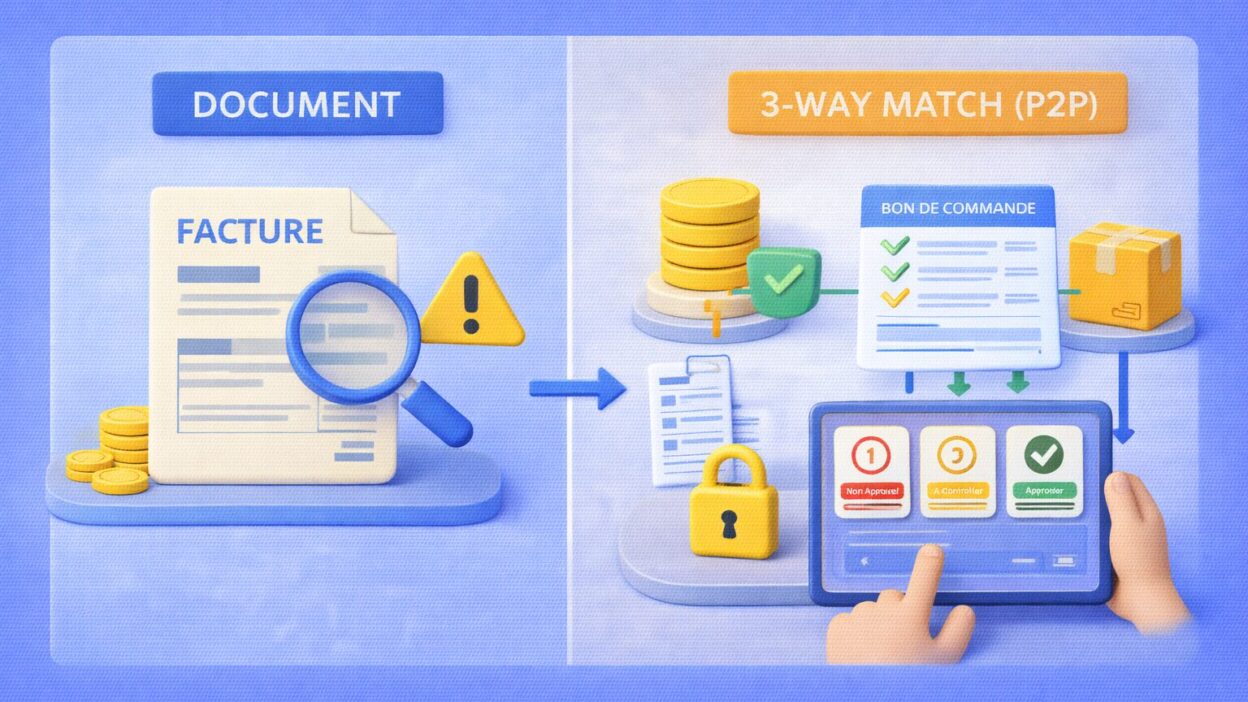
The electronic invoicing reform, with a deadline looming for 2026 in France, is far more than a simple technological evolution. While the spotlight is often on client invoice issuance, the true operational and strategic turning point for enterprises lies in the management of supplier invoice reception. From September 2026 onwards, all VAT-liable companies must be capable of receiving electronic invoices that comply with regulations. This universal obligation represents a major challenge, transforming the invoice from a simple PDF document into a flow of structured data, requiring a complete overhaul of internal processes.
In this new landscape, a non-compliant invoice is no longer an anomaly to be corrected, but an immediate rejection, with direct consequences for cash flow, supplier relationships, and the workload of accounting teams. The diversity of suppliers, from micro-enterprises to large groups, and their heterogeneous level of preparedness for this reform amplify the complexity. This is where the Procure-to-Pay (P2P) approach and the famous “3-way match” become indispensable pillars, not only to ensure compliance, but above all to transform this constraint into an opportunity for lasting performance. This article aims to enlighten enterprises on the challenges of receiving electronic supplier invoices, to identify concrete obstacles and to propose a pragmatic support strategy, rooted in robust P2P logic, to navigate successfully toward 2026 and beyond.
⏱️ The Essentials in 2 Minutes
- The obligation to receive e-invoices applies to all VAT-liable companies from September 2026, without exception, making supplier-side preparation the major challenge.
- The invoice transforms from an unstructured PDF document into a flow of standardized data (Factur-X, UBL, CII), requiring systems capable of processing, checking and integrating this data automatically.
- The 3-way match (reconciliation of Purchase Order, Goods Receipt, Invoice) becomes the central tool for securing payments, automating controls and guaranteeing compliance, by integrating the invoice into a controlled Procure-to-Pay chain.
Why Supplier Electronic Invoicing Is the Real Challenge of 2026
The electronic invoicing reform, often summed up as a story of client-side issuance, actually reveals its most pressing issue on the supplier side. The reception of electronic invoices is, for many organizations, the true test of their preparedness for the 2026 deadline.
The universal reception obligation from September 2026 is the starting point for this transformation. Unlike issuance, which benefits from a progressive schedule based on company size, the capacity to receive e-invoices will be mandatory for all VAT-liable entities as of the fateful date. This means that a company unprepared for this reception risks becoming “unreachable” for its suppliers. The consequences are immediate and serious: invoices not integrated, payment delays, cascading disputes, and exponential overload for accounts payable teams.
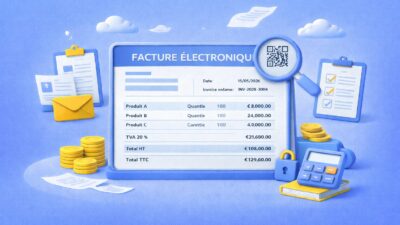
It is crucial to distinguish a PDF from an electronic invoice in the context of the reform. Sending a PDF by email, even if it looks clean, does not constitute a compliant electronic invoice. Tomorrow’s invoice is a flow of structured data (Factur-X, UBL, CII), transmitted via certified platforms and subject to automated controls. It is no longer a simple document to file, but a data event to process. This distinction marks a paradigm shift: one no longer “processes” an invoice visually, but “processes” structured information that must integrate into a digital process.
The immediate impact of rejections on cash flow is a reality that must not be underestimated. A non-compliant invoice will no longer be accepted and corrected after the fact. It will be rejected upstream of the accounting process. Each rejection causes a payment block, tedious corrective exchanges, degradation of supplier relationships and significant increase in workload for finance teams. Payment fluidity and supply chain continuity are directly threatened.
Finally, it is important to compare the volume of supplier invoices to client invoices. Most companies receive a significantly larger number of invoices than they issue. This volume asymmetry, combined with the wide diversity of supplier profiles (micro-enterprises, SMEs, large groups, independents), makes harmonization and reception management infinitely more complex than that of issuance. The management of these heterogeneous and voluminous flows represents the Gordian knot of the reform.
3-Way Match as a Pillar of Compliance and Performance
Faced with the influx of structured electronic invoices and the need to automate controls, the 3-way match, or three-way reconciliation, emerges as a fundamental building block. It is the linchpin for ensuring compliance, securing payments and optimizing supplier invoice processing.
Defining the 3-Way Match
The 3-way match is an automatic reconciliation process of three key documents within the procurement cycle:
- The Purchase Order (PO): it formalizes the purchasing commitment, specifying items, quantities, unit prices and delivery conditions.
- The Goods Receipt (GR or Service Entry Sheet): it attests to the proper delivery of goods or performance of services in accordance with the order.
- The Invoice: it represents the supplier’s payment request, summarizing the billed services.
The objective of the 3-way match is to automatically reconcile these three elements. If the information contained in the invoice (amount, quantities, items, references) matches those of the purchase order and goods receipt, within predefined tolerance limits, the invoice can be accepted, validated and paid automatically. This process provides unmatched control automation, drastically reducing manual interventions and errors. It also ensures complete transaction traceability, from initial commitment to final payment, essential in case of audit or dispute.
Making the 3-Way Match Indispensable in 2026
The 2026 reform propels the 3-way match from the status of “best practice” to that of “essential.” Indeed, the arrival of structured formats (Factur-X, UBL, CII) makes the exploitation of invoice data easier and more reliable than ever. Invoice lines, amounts, VAT rates, and especially purchase order or contract references, are now data fields directly exploitable by computer systems, without resort to OCR or manual entry. This wealth of data greatly facilitates automatic reconciliation.
The benefits in terms of security are major. The 3-way match enables protection against over-billing (amounts exceeding orders), payments before receipt (payment for goods not yet delivered or services not rendered), duplicates, and quantity or price errors. It is a proactive protection of cash flow and a guarantee of proper use of company funds.
It is important to differentiate between 2-way match and 3-way match. The 2-way match (Purchase Order ↔ Invoice) is suitable for simple purchases where receipt is not formalized or for services without physical delivery. However, the 3-way match (Purchase Order ↔ Goods Receipt ↔ Invoice) is crucial and becomes a prerequisite as soon as there is physical delivery of goods or provision of services to confirm. It is particularly relevant where disputes are costly, where quantities and quality are critical, or for significant investments.
P2P (Procure-to-Pay) as an Accelerator
The 3-way match reaches its full potential when integrated into a global Procure-to-Pay (P2P) process. P2P is an integrated chain encompassing the entire purchasing cycle, from initial purchase request to final payment. It allows integrating the invoice into a controlled chain of processes, where each step is connected and traced.
A robust P2P enables avoiding “no PO” invoices, one of the main causes of delays and disputes. By requiring the creation of a validated purchase order upstream, P2P ensures that all expenses are justified and budgeted. It automates validations and detects discrepancies, not only at the invoice level, but also at receipt. This preventive approach is a powerful lever for efficiency and cost reduction.
P2P ensures that the invoice is not an isolated event, but the logical and predictable consequence of a well-conducted purchasing process, thus enabling maximum dematerialization and automation.
Obstacles to Industrialization and How to Overcome Them
Despite the obvious benefits of 3-way match and P2P, many companies face difficulties industrializing them. These obstacles stem from internal challenges related to their own processes and their suppliers’ ability to adapt.
Internal Challenges in Invoice Reception
Several recurring barriers exist within organizations when it comes to implementing structured invoice reception:
- Identifying invoices without a purchase order (no PO, no pay): This is problem number one. Without a clear and prior purchase order number, reconciliation is impossible. This generates “ghost” invoices requiring lengthy and costly manual investigation. The solution lies in a firmly applied and progressive “no PO, no pay” policy, the implementation of simple and accessible purchase requests, the use of electronic catalogs or framework contracts, and the definition of thresholds for critical purchases.
- Absence or delay of goods receipt: For goods and services requiring attestation of delivery or performance, the absence of receipt recording blocks the 3-way match. Operations teams do not always formalize this step, or do so too late. The solution lies in simplifying receipt entry (via a mobile app, web portal, or even simple email), establishing clear rules by purchase type (goods versus services), and making end requesters responsible for this crucial step.
- PO references absent from the invoice: Even when an order exists, it sometimes happens that the supplier omits mentioning the order reference on the invoice. This simple omission is enough to break the automation chain. It is essential to include this requirement in supplier contracts, to systematically remind it on purchase orders, and to implement automatic follow-ups for invoices without reference. A supplier “kit” with a checklist can also be very useful.
These internal challenges require a review of purchasing practices and strong awareness among teams.
Supplier Difficulties in Adapting
The other side of obstacles lies in suppliers’ ability, or inability, to adapt to the reform:
- Lack of tools for micro-enterprises and SMEs: A large number of suppliers, particularly micro-enterprises, independents and local structures, do not use ERP or advanced invoicing software. For them, the invoice is often a manually created document (Word, Excel) then converted to PDF. The idea of having to generate a flow of structured data can be perceived as an insurmountable obstacle.
- Confusion between PDF and e-invoice: This is a common misconception. Many suppliers believe they are already compliant because they send invoices by email in PDF format. It is crucial to explain to them that the reform requires structured data and transmission via specific platforms, and that a PDF alone is insufficient.
- Perceived complexity of the reform: The technical jargon (PPF, PA, OD, Factur-X, UBL, CII) and regulatory subtleties can discourage suppliers. They perceive the reform as complex administrative constraint, removed from their core business, whose benefits are not always obvious to them.
These difficulties require a clairvoyant and proactive support strategy from client companies.
Supplier Support Strategy for 2026
The success of the transition to electronic invoicing in 2026 will depend heavily on enterprises’ ability to support their suppliers. Ignoring their difficulties exposes you to a deluge of non-compliant invoices, rejections and disputes. A structured support strategy is essential.
Prioritizing Support
A uniform approach for all suppliers is unrealistic. The key is segmentation and prioritization:
- Segment suppliers (strategic, recurring, occasional):
- Strategic suppliers: Those with the largest invoice volumes, the most significant amounts or who are critical to operations. They should be supported as a priority and in depth.
- Recurring suppliers: Those with regular flows but less critical. Clear communication and simplified tools will suffice.
- Occasional suppliers: Low volume, limited impact. A lighter approach, focused on providing a simplified portal, may be considered.
- Focus on volumes and financial risks: Concentrate your efforts where the risk of rejection and impact on cash flow are highest. This enables rapid return on investment from your support actions.
- Allow a progressive and iterative approach: Do not aim for immediate perfection. Launch pilots with a group of suppliers, learn from experience, adjust your communication and tools, then gradually expand to other segments.
Concrete Levers to Facilitate Adoption
To transform the constraint into smooth adoption, several levers can be activated:
- Clarify expectations (formats, channels, dates): Suppliers need clear and unambiguous directives. Which formats are accepted (Factur-X is recommended), via which channel should invoices be sent (your Certified Platform – PA), from which date the obligation applies to them, and what are the consequences of non-compliance (rejection, payment delay). A concise guide and FAQ are valuable tools.
- Simplify the message (avoid jargon, explain benefits): The supplier does not need to become an expert in regulation. Explain simply what they need to do and, most importantly, what they have to gain (faster payment, fewer disputes, better traceability). Ban technical jargon and complex acronyms.
- Provide a unique and clear reception channel: Uncertainty about “where to send my invoice” is a major barrier. Communicate a single, stable entry point for all electronic invoices. This can be your PA directly or a supplier portal set up as part of your P2P solution.
- Use payment as an incentive lever: This is often the most powerful lever. A supplier who understands that a compliant electronic invoice is processed and paid much faster and with fewer errors will be much more inclined to adopt new practices. Highlight reduced payment times for compliant electronic invoices.
| Supplier Support Strategies | Benefits for the Enterprise |
|---|---|
| Prioritization of suppliers (strategic, recurring) | Rapid reduction of operational and financial risks |
| Clear and simplified communication | Increased adoption rate and reduced rejections |
| Provision of a unique reception channel | Standardization of flows, reduction of sending errors |
| Incentive through faster payments | Increased supplier motivation for compliance |
| Personalized support and assistance | Strengthening of supplier relationship, fluidity of exchanges |
Implementing Robust Reception and Processing
The success of supplier electronic invoicing is not limited to regulatory compliance. It requires the implementation of robust reception and processing processes, capable of handling large volumes of data, automating controls and ensuring traceability. A step-by-step approach enables building a resilient and high-performing system.
Steps Toward Accessible Dematerialization
To make supplier invoice dematerialization truly accessible and effective, it is advisable to follow a progressive roadmap:
- Step 1: Stabilize reception (compliance + continuity)This is the foundation. It involves ensuring a declared reception platform (PA) and a capacity to process Factur-X, UBL and CII formats. This includes status management (received, rejected, accepted, etc.) and clear rejection mechanisms. Compliant data storage and associated evidence is also essential from this step.
- Step 2: Accelerate “PO-based invoicing” (purchase request, purchase order)To prepare for 3-way match, purchase order usage must be generalized. This involves rolling out purchase requests on critical categories, generalizing purchase orders for main suppliers, and establishing a PO reference standard (unique and mandatory purchase order number on invoices). The fewer invoices without PO, the more automation is possible.
- Step 3: Industrialize 3-way match (systematic receipt, tolerances)Once the foundations are in place, the objective is to industrialize automatic reconciliation. This involves establishing systematic receipt (at least for goods and structured services), defining tolerance rules (acceptable discrepancies in prices or quantities) and implementing automatic acceptance and payment of perfectly compliant invoices.
- Step 4: Manage exceptions (typology, corrective loop, KPIs)No system is perfect. The added value then lies in efficient exception management. You must classify discrepancies (price error, quantity, VAT, missing reference), implement a “correct and resubmit” supplier loop (rather than modifying internally), and track KPIs to identify root causes and improve the process.
Electronic Invoice Reception & Processing Workflow Diagram
1. Supplier Issuance
Invoice in structured format (Factur-X, UBL, CII)
2. Client PA Reception (Weproc)
Regulatory controls, statuses
3. P2P Integration (Weproc)
Verification of references, VAT data
4. 3-Way Match Reconciliation
PO ↔ Goods Receipt ↔ Invoice (Automated)
5. Validation & Payment
Automatic or exception management
6. Probative Storage
Structured data + visual rendering + statuses
Key Performance Indicators (KPIs)
To measure the effectiveness of this transformation and identify improvement opportunities, tracking relevant KPIs is crucial:
- % invoices with PO: Enables measurement of purchase order adoption rate upstream and the “no PO, no pay” policy.
- % invoices with automatic 3-way match: Indicates the level of control automation and process fluidity. The higher this rate, the greater the time savings.
- Rejection/exception rate and their reasons: Reveals bottlenecks, least compliant suppliers and recurring process problems.
- Invoice to payment cycle time: Measures the speed of invoice processing, from receipt to payment. A short cycle is a sign of efficiency.
- Accounting support workload (time spent on exceptions): Evaluates the real cost of exceptions and impact on finance team productivity. The objective is to reduce this workload to a minimum.
The Crucial Role of Storage and Evidential Value
Beyond reception and processing, the preservation of electronic invoices is a fundamental aspect of compliance. The reform strengthens the requirement for evidential value:
- Preserve structured data + visual rendering: It is not enough to store the PDF or XML file. Storage must include the structured data file, as well as a readable visual rendering faithful to the original.
- Integrate statuses and transmission traceability: The archiving system must be able to preserve the history of invoice statuses (accepted, rejected, payment) and proof of its transmission via certified platforms. This is the guarantee of a reliable audit trail.
- Comply with legal retention periods: Electronic invoices must be retained for 10 years, under conditions guaranteeing their integrity and authenticity, and accessible at any time in case of audit.
Storage and archiving are no longer secondary tasks, but an integral part of the evidential value chain of electronic invoicing, requiring dedicated solutions or integration into robust P2P.
Transforming the 2026 Constraint into Lasting Performance
The supplier electronic invoicing reform for 2026, though initially perceived as a regulatory constraint, is actually a major strategic opportunity. It pushes enterprises to rethink and optimize their purchasing and accounts payable processes, transforming them from reactive logic to a proactive, data-driven approach.
The true gain lies in the ability to reposition the supplier invoice as proof of a controlled process. It is no longer a document “to be checked” at the end of the journey, but the reflection of commitments (purchase order) and achievements (goods receipt) that have been validated upstream. It is the visible realization of a well-orchestrated Procure-to-Pay chain.
The ROI of a robust P2P on invoice reception and control is significant. It manifests itself in a drastic reduction in supplier disputes, a decrease in payment delays, an elimination of data entry errors and an optimization of processing costs. The added value lies not only in compliance, but in a tangible improvement in operational and financial efficiency.
Companies that will know how to benefit from this reform will gain in reliability, peace of mind and financial performance. Automated processes minimize risks, enhanced traceability ensures compliance, and payment fluidity improves supplier relationships. This transformation also enables teams to focus accounts payable on exceptions, rather than on data entry or resolution of recurring problems. Accountants can thus dedicate their time to analysis, management and strategy, rather than to repetitive administrative tasks.
In sum, 2026 is not a mere deadline, but a strong incentive to modernize the foundations of spending management. By investing in a P2P system natively integrating 3-way match and rigorous electronic receipt management, companies do more than comply: they build lasting competitive advantage, characterized by better cost control, optimized cash flow and strengthened supplier relationships. Weproc supports companies in this transformation, offering them an integrated P2P solution to effectively manage purchases, budgets and suppliers, ensuring a smooth and high-performing transition to tomorrow’s electronic invoicing.