
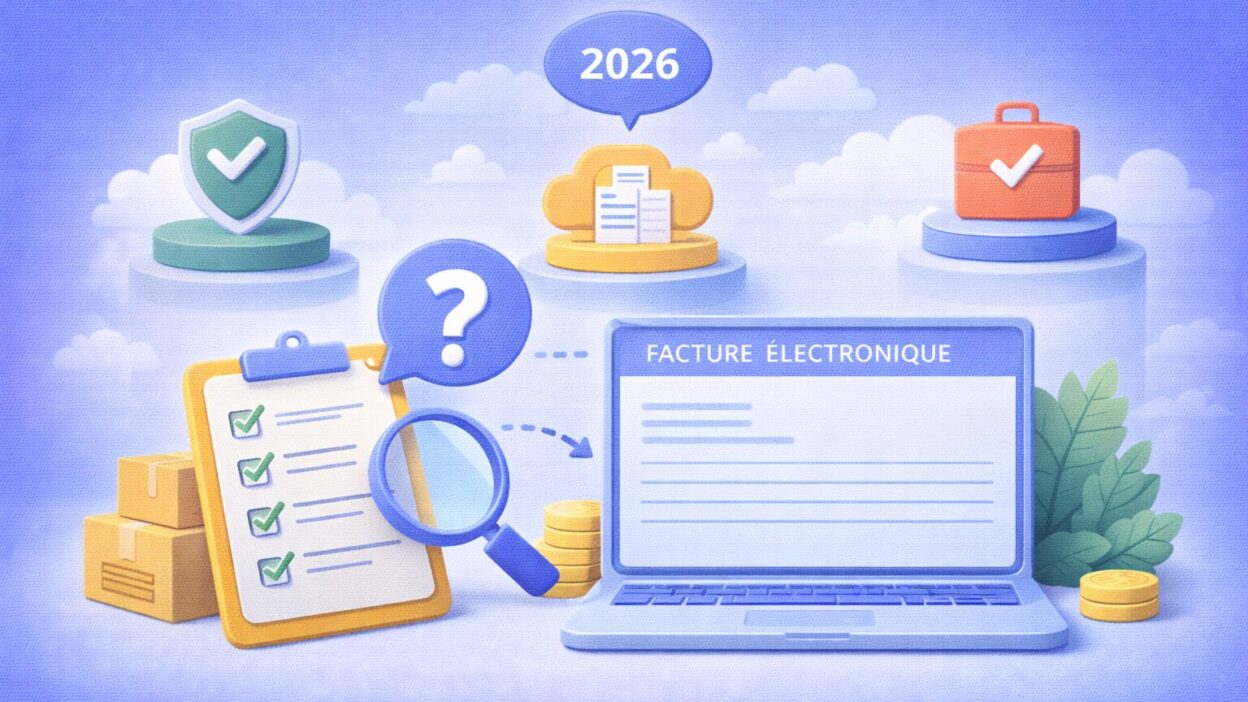
From 2026 onwards, mandatory electronic invoicing will profoundly transform the invoicing processes of French companies. This reform goes far beyond a simple format change; it redefines the circuits for issuing, receiving and transmitting tax data, with direct and major impacts on finance, procurement and IT teams.
For many, the 2026 deadline still seems far away, but the complexity and scope of this transformation require strategic anticipation. It’s no longer simply a matter of “being compliant”, but of ensuring the fluidity of flows, avoiding invoice rejections that can paralyze cash flow, securing payments and controlling integration costs. A poor choice today could lock the organization into inefficient processes for several years, whereas an informed decision can, conversely, durably strengthen financial and operational performance.
A key point is often poorly understood and deserves to be highlighted: the reform does not impose the use of a single platform per company. It is even common, and often recommended, to use multiple certified platforms within the same organization. For example, one platform could be dedicated specifically to issuing customer invoices, while another would focus on receiving, controlling and integrating supplier invoices. This pragmatic approach reflects the reality of business processes and tools already in place.
In an ecosystem where the Public Invoicing Portal (PPF), Certified Dematerialization Platforms (PA), Dematerialization Operators (OD) and various business solutions coexist, understanding the role of each player is essential for making the right choices. This article aims to guide you concretely in selecting the platform(s) suited to your organization, your real flows and your regulatory deadlines. Prepare to transform an obligation into a true strategic opportunity.
⏱️ The Essential Points in 2 Minutes
- Electronic invoicing will become a generalized legal obligation in France from 2026, requiring a profound transformation of companies’ internal processes.
- The Certified Platform (PA) is not just a technical tool: it acts as a regulatory trusted third party, guaranteeing compliance, transmission and traceability of electronic invoices.
- The “right” platform choice depends on your specific flows (primarily issuance or reception) and your company profile; a unique universal solution is not always the most effective strategy.
Electronic Invoicing in 2026: Understanding the Challenge
The electronic invoicing reform, whose official calendar for electronic invoicing is scheduled to begin in 2026, marks a major turning point for all VAT-registered companies in France. Far from being a simple technological update, it is a profound transformation that will redefine the way companies manage their business documents and interact with their partners and the tax administration.
The primary objective of this reform is threefold: to combat VAT fraud, to improve company competitiveness through dematerialization, and ultimately to facilitate tax reporting through better real-time knowledge of economic activity. For companies, this translates into the obligation to issue and receive their B2B invoices in a structured electronic format, and to transmit transaction data (e-reporting) for B2C operations or international transactions. An informed choice of electronic invoice format is therefore critical. This obligation is accompanied by a paradigm shift, moving from direct document exchange to exchange orchestrated via certified intermediary platforms.
A Cross-Functional Impact on Finance, Procurement and IT Teams
The ramifications of this reform extend far beyond the accounting department. They significantly affect several key functions in the company:
- Finance and Accounting teams: They must ensure the compliance of invoices issued and received, automate reconciliations, optimize cash flow management and integrate electronic flows into their existing systems. Payment delays, disputes and invoice rejections could be amplified if processes are not robust. Managing invoice statuses (submitted, refused, accepted, paid) becomes crucial for tracking and collection.
- Procurement teams: They will be on the front lines to effectively support suppliers in this transition. Receipt of electronic invoices, their verification and matching with purchase orders and receipts are essential to ensure the fluidity of the Procure-to-Pay cycle. Poor management of supplier invoices can directly impact supplier relationships and the supply chain.
- IT teams: They will be responsible for integrating new platforms with existing information systems (ERP, business management tools, P2P solutions), data security, format management and interoperability. This is a major technical undertaking, requiring flexible and scalable architecture.
The Strategic Importance of Platform Selection
In this new context, the choice of the electronic invoicing platform for 2026 becomes an eminently strategic subject, far beyond a simple regulatory checkbox. It is not just about acquiring a tool, but about committing to a technological and operational trajectory that will impact the company’s resilience and performance for years to come.
An informed choice will not only achieve regulatory compliance, but also optimize processes, reduce administrative costs, accelerate payment timelines and improve business relationships. Conversely, a hasty or poorly targeted decision could lead to constant operational friction, significant hidden costs, non-compliance risks and loss of competitiveness. This is why a thorough understanding of the reform mechanisms and the various available options is critical.
Certified Platform (PA): What Is It and Its Key Role?
At the heart of the electronic invoicing framework for 2026 is the concept of Certified Platform (PA). To consult the official list of Certified Platforms, it is recommended to refer to the sources of the French tax authority. Understanding its role precisely is fundamental, because it goes far beyond a simple technical intermediary; it is an actor of compliance and a true regulatory trusted third party.
Definition of Certified Platform (PA)
A Certified Dematerialization Platform (PA), formerly called Dematerialization Partner Platform (PDP), is a private entity that has been registered by the tax administration. This registration grants it authorization to operate in the official electronic invoicing circuit. A PA is much more than a simple dematerialization solution; it is an entity that must comply with a strict specification, guaranteeing the security, reliability and traceability of electronic invoice and transaction data flows.
Its mission is to ensure interoperability between companies, regardless of the platform they use, and to transmit to the tax administration, via the Public Invoicing Portal (PPF), the information necessary for VAT management and knowledge of economic activity.
Key Functions and Compliance Role
The role of a PA is multifaceted and far exceeds simple document transmission. Its key functions include:
- Issuance of electronic invoices: It enables companies to issue invoices in accepted structured formats (Factur-X, UBL, CII) and to ensure their compliance before sending.
- Reception of electronic invoices: It is capable of receiving invoices from various suppliers, regardless of the transmission channel (another PA, PPF), and making them available to the receiving company.
- Invoice transmission: It ensures the routing of invoices between the issuing PA and the receiving PA (or the PPF if the recipient does not have a PA), guaranteeing data integrity and security.
- Compliance verification: Before any transmission, the PA is responsible for verifying the presence of mandatory information, the validity of formats and data consistency, thereby reducing the risk of rejections.
- Invoice lifecycle management: It manages and transmits invoice processing statuses (submitted, accepted, refused, paid, etc.), providing complete traceability and valuable information for finance.
- E-reporting: For transactions not subject to electronic invoicing (B2C, international transactions), the PA collects and transmits transaction data to the PPF.
This role as a “regulatory trusted third party” is essential. The PA is responsible for ensuring that flows comply with current tax legislation. In case of non-compliance, it is at the front line to identify and report errors, thus protecting the company from potential penalties.
Flow Orchestration: A New Paradigm
The new electronic invoicing circuit is based on precise orchestration between the issuer, the recipient, the Certified Platforms and the Public Invoicing Portal (PPF). This “Y” model ensures fluid and secure invoice and data circulation.
When a company issues an invoice:
- It transmits the electronic invoice to its own PA (Issuing PA).
- The Issuing PA performs compliance checks, applies an electronic seal if necessary, and transmits the invoice:
- Either directly to the recipient’s PA if they have one.
- Or to the PPF, which then makes it available to the recipient (if they use the PPF) or redirects it to their PA.
- Simultaneously, the Issuing PA (or the PPF) transmits essential invoicing data to the tax authority.
When a company receives an invoice:
- Its PA (Receiving PA) receives the invoice from the issuing PA or from the PPF.
- The Receiving PA performs additional checks and makes it available to the receiving company, often by integrating it into its information system.
This circuit ensures complete traceability and validation by a trusted third party, guaranteeing the authenticity of origin, the integrity of content and the readability of the invoice. A Certified Platform is therefore not a simple “pipe”, but an indispensable link in the chain of trust and compliance.
Simplified Diagram of the 2026 Electronic Invoicing Circuit
(Generates compliant invoice)
(Issuing – Controls & Transmits)
(Tax Administration – Centralization & Routing)
(Receiving – Makes available)
(Integrates and processes invoice)
This diagram illustrates the circulation of an electronic invoice via Certified Platforms and the Public Invoicing Portal, guaranteeing traceability and compliance.
Why Platform Choice Depends on Your Role (Issuer vs. Receiver)
One of the most common mistakes when approaching electronic invoicing is seeking a “universal” solution that would handle both issuing your customer invoices and receiving your supplier invoices. Yet the operational reality of companies shows that these two processes follow very different logics and involve distinct challenges. The “right” platform choice is intrinsically linked to your primary role in invoicing flows.
Issuance vs. Reception: Two Distinct Logics
The distinction between issuance and reception is crucial to understanding your company’s specific needs:
- Issuance of customer invoices: For a company, this involves producing invoices compliant with regulations, in a structured electronic format (Factur-X, UBL, CII), and transmitting them via a certified platform. The process is generally well-controlled internally. The main challenge is ensuring that the existing invoicing tool (ERP, business management software) can generate the required formats and interface easily with a PA. For companies that issue a moderate volume of invoices or whose ERP is already highly structured, this component can be relatively simple to implement.
- Reception of supplier invoices: This is often where the complexity lies. Companies receive potentially very high volumes of invoices from suppliers whose digital maturity can vary extremely. Invoices can arrive in different formats, via different PAs, or even via the PPF. Reception-side challenges are significant and directly impact:
- Cash flow: A blockage or delay in processing a supplier invoice can delay payment and degrade cash flow.
- Supplier relationship: Frequent rejections or processing difficulties can generate disputes and damage business relationships.
For most companies, the reception flow is where significant pressure occurs. The challenge is not just receiving electronic invoices, but receiving them correctly, automatically checking for compliance, matching them with purchase orders and receipts, and integrating them into accounting systems without manual intervention. This is where the value of a well-chosen platform becomes apparent.
Thus, many companies benefit from a platform dedicated to reception that can:
– Receive invoices from multiple suppliers and sources (different PAs, PPF)
– Perform systematic compliance checks
– Automatically match invoices with purchase orders and receipts
– Integrate into accounting and ERP systems
– Generate alerts and workflows for exceptional cases
For this reason, the most significant operational risks generally concentrate on the supplier invoice reception side. Managing this diversity and these volumes effectively requires specific capabilities that a platform oriented solely toward issuance cannot always provide. A dedicated solution is essential to optimize supplier invoice management.
To Remember: Seeking a single platform for both issuance and reception is not always the best strategy. The right choice is one that aligns with where your real risks, volumes, and operational needs actually lie.
Supplier Logic vs. Client Logic
This duality is also reflected in the expectations and imperatives of the “supplier” (who issues the invoice) and “client” (who receives the invoice) roles:
- From the supplier’s (issuer’s) perspective: The main challenge is to ensure the regulatory compliance of their invoice and its proper transmission to the client via a PA. The goal is to ensure payment within a reasonable timeframe, and for this, the invoice must be accepted without delay. The platform must therefore guarantee that formats are correct and transmission is reliable.
- From the client’s (receiver’s) perspective: The challenge is much broader and more complex. This includes:
- Controlling mandatory information: Ensuring that the received invoice is legal and contains all information required for VAT deductibility.
- Matching with commitments: Verifying that the invoice corresponds to a validated purchase order and/or receipt. This is the key “matching” step that conditions payment approval.
- Accounting integration: Ensuring smooth integration of invoice data into the company’s accounting system.
- Securing payment: Validating and triggering payment efficiently while respecting supplier payment terms.
These two logics do not necessarily require the same functionalities or levels of robustness. An issuance-focused platform can be simple and straightforward, whereas a reception-focused platform must be capable of managing heterogeneous flows, performing complex controls, and integrating deeply into procurement and payment management processes.
Very Different Use Cases
To illustrate, consider two scenarios:
- A small business that primarily issues invoices to a limited number of customers and receives only a few dozen supplier invoices per month can rely on a PA connected to their existing invoicing tool, with minimal orchestration needs on the reception side.
- Conversely, a large industrial group that receives thousands of supplier invoices per month from hundreds of different parties would benefit greatly from choosing a PA or a solution specialized in reception. This solution must be capable of absorbing flows, controlling compliance automatically, facilitating matching with purchase orders, and integrating perfectly into the company’s Procure-to-Pay (P2P) cycle.
The “one company, one platform” approach is therefore an excessive oversimplification that can hide significant inefficiencies and risks. The key is to tailor your choice based on your operational priorities and the specifics of your flows.
The 5 Major Categories of Platforms in the 2026 Market
The electronic invoicing market, which is in full momentum as 2026 approaches, is not monolithic. It segments into several platform categories, each designed to meet distinct business needs and logics. Understanding these typologies is essential to avoid committing to a path ill-suited to your processes and structure. There is no universally “best platform”, but one or more optimal solutions depending on your profile.
1. Emission-Oriented Platforms
- Who it’s for: Primarily companies whose core activity is issuing invoices. This often includes SMEs acting as suppliers to larger structures, or companies with significant issuance volumes but more manageable reception. Their priority is to ensure the compliance of their customer invoices and guarantee their proper transmission for quick payment.
- Strengths:
- Simplicity of compliance: They are designed to facilitate the generation of required electronic formats (Factur-X, UBL, CII) from existing invoicing data.
- Direct connection to the official circuit: They ensure the transmission of invoices to receiving PAs or the PPF, while guaranteeing compliance and traceability.
- Controlled cost: Often less expensive for pure issuance, they are suited to smaller organizations’ budgets.
- Limitations:
- Not well-suited to managing incoming volumes: Their reception functionalities are often basic or non-existent. They do not provide tools to manage format heterogeneity or advanced supplier-side controls.
- Limited coverage of control and matching issues: They do not facilitate supplier invoice validation against purchase orders or receipts, nor do they secure payment.
- Limited vision for procurement and suppliers: They generally do not fit into a Procure-to-Pay cycle optimization logic.
2. Reception-Oriented Platforms
- Who it’s for: These platforms target companies that receive a significant volume of supplier invoices. This often concerns mid-market companies and large groups with strong concerns about expense control, cash flow management, and supplier relationship optimization.
- Strengths:
- Ability to absorb heterogeneous flows: They can process invoices from multiple sources (other PAs, PPF), in different formats, and often normalize them for integration.
- Automatic verification of mandatory information: They integrate robust rules to verify the fiscal and legal compliance of invoices, reducing rejection risks and non-deductibility.
- Purchase order / invoice / receipt matching: This is a major strength. They facilitate automatic 2-way or 3-way matching, essential for processing automation and payment security.
- Securing supplier payment: By streamlining the validation process, they help respect payment timelines and optimize cash flow.
- Limitations:
- Do not always cover issuance: Some are exclusively reception-focused and do not offer functionalities for issuing customer invoices.
- Require clear coordination with the ERP: To be fully effective, they must integrate upstream and downstream of the ERP or invoicing tool for purchase order data sharing and accounting data feedback.
3. ERP with Integrated PA Layer
- Who it’s for: Organizations already highly structured around a central ERP (SAP, Oracle, Microsoft Dynamics, Sage X3, etc.). For these companies, the goal is to minimize disruptions in their information system and capitalize on existing investments.
- Strengths:
- Native integration with existing processes: Adding the PA layer within the ERP guarantees data and workflow continuity, avoiding complex interfaces and re-entry.
- Data continuity and IT centralization: All information (orders, deliveries, invoices) remains in a single system, simplifying management and oversight.
- Control of the environment: IT teams already know the tool, which can facilitate deployment and maintenance.
- Limitations:
- Sometimes incomplete supplier reception coverage: While some ERPs are evolving, their reception module may lack the robustness needed to manage the extreme heterogeneity of supplier flows and advanced controls.
- Less flexible with heterogeneous suppliers: An ERP may struggle to adapt to the many formats and reception channels without costly custom developments.
- Often heavy and expensive deployments: ERP integration projects can be lengthy, complex, and generate significant costs in configuration and custom development.
4. OD + PA Separate Model
- Who it’s for: Companies that want to retain their existing business tools or ERP without major modifications, but rely on external solutions for compliance and transmission. This involves interfacing with a Dematerialization Operator (OD) that prepares the invoices, which then connects to a PA.
- Strengths:
- Architecture flexibility: Allows building a modular architecture by choosing the best tools for each functional component.
- Reuse of existing tools: Capitalizes on existing IT investments and reduces major overhaul needs.
- Suited to multi-tool environments: Ideal for companies using multiple specialized software for different parts of their process.
- Limitations:
- Orchestration complexity: The multiplicity of actors (internal tools, OD, PA) can make flow orchestration complex and require integration expertise.
- Multiple points of contact: In case of problems, identifying who is responsible can be more difficult, potentially diluting responsibilities.
- Risk of responsibility dilution: It is crucial to clearly define the roles of each party (OD vs PA) to avoid gray areas in case of non-compliance.
5. Procure-to-Pay (P2P) / e-Procurement Solutions
- Who it’s for: Primarily finance and procurement leaders seeking to structure and optimize the entire spending cycle, from purchase request to payment. These solutions offer an end-to-end view of processes.
- Strengths:
- End-to-end vision (commitment → invoice → payment): They integrate all stages of the purchasing process, offering complete traceability and greater expense control.
- Reception and compliance mastery: P2P solutions are naturally very strong in receiving supplier invoices, automatic controls (including mandatory information), and matching with purchase orders. They are often connected to PAs or becoming connected.
- Alignment with expense management priorities: By offering a consolidated view of spending, they facilitate supplier negotiation, budget compliance, and cost analysis.
- Rationalization of approval workflows: They enable automation and digitalization of invoice validation circuits.
- Limitations:
- Require clear coordination with issuance tools: While very strong on reception, they do not always manage customer invoice issuance natively.
- Do not always replace a commercial invoicing tool: An ERP or invoicing software will remain necessary for customer invoice management, with an interface to the P2P solution for the reception component.
It is important to remember that there is no “best platform” in itself, but the most relevant and effective combination depending on your flows, your risks, your existing IT ecosystem, and your actual role in invoicing.
Key Criteria for Strategic Platform Selection
The choice of an electronic invoicing platform for 2026 cannot be a simple catalog selection exercise. It is a strategic decision that engages operational efficiency, regulatory compliance, and your company’s financial performance. A poorly chosen platform can quickly become a costly bottleneck: invoices rejected, payment delays, manual re-entry, IT cost overruns, and excessive vendor lock-in. To avoid these pitfalls, it is imperative to rely on structuring criteria, regardless of your company profile (SME, mid-market, large group).
Here are the essential criteria to evaluate in order to make an informed choice:
| Criterion | What to concretely verify | Why it’s critical |
|---|---|---|
| True regulatory compliance | Certified Platform (PA) status or clear interconnection with a PA, compliance with EN 16931 standard, proactive e-reporting and invoice lifecycle status management. The mastery of electronic invoice storage is also a major concern for their probative value. | Announced “compatibility” is insufficient; only operational compliance verified by the tax administration will prevent invoice rejections, payment delays, and financial or administrative penalties. |
| Issuance / Reception Coverage | Evaluate whether the platform effectively handles issuance of your customer invoices, reception of all your supplier invoices, or allows controlled separation of the two flows through modular architecture. | Operational and financial risks are predominantly concentrated on the supplier invoice reception side. Trying to force a single tool onto such different logics is often counterproductive and a source of friction. |
| Format Management | Ensure native and transparent support for structured formats (Factur-X, UBL, CII) without requiring manual conversions or complex third-party tools. The platform must be able to transform raw data into compliant formats and vice versa. | Formats are the language of electronic invoicing. Their proper management conditions process automation, reliability of transmitted and received data, and interoperability with your partners’ and administration’s systems. |
| Control & Rejection Capacity | Verify the integration of robust automatic controls on mandatory information (VAT, SIREN/SIRET, date), data consistency (order numbers, amounts), and clear and immediate handling of non-compliant invoice rejections. | In electronic invoicing, a non-compliant invoice is not merely “wrong”; it is potentially blocked or rejected before reaching your accounting system. Effective controls prevent disputes and secure your cash flow. |
| Integration with Your Tools | Look for native connectors with your ERP, accounting software, P2P / e-procurement tools, as well as documented and easy-to-use APIs for custom integrations. | A platform isolated from your existing IT ecosystem will inevitably generate manual re-entry, data inconsistencies, bottlenecks, and internal friction, negating automation benefits. |
| Scalability & Multi-Entity | Ensure the solution can handle high and growing invoice volumes, support multiple legal entities, multiple SIREN/SIRET within the same group, and adapt to a potentially multi-country architecture in the future. | The reform is progressive, but the generalization of flows will lead to rapid volume increases. A non-scalable solution can quickly become obsolete and require costly reworking. Groups have specific consolidation needs. |
| User Experience (UX) | Prioritize an intuitive and readable interface for finance teams, simplicity of use for suppliers (supplier portal), and easy handling of exceptions and disputes. | Poor user experience degrades solution adoption, generates frustration, and shifts workload to internal teams, who will spend time working around the tool rather than using it effectively. |
Common Mistakes to Avoid When Choosing
As the 2026-2027 deadlines approach, many companies are making quick and sometimes hasty decisions about their electronic invoicing platform. This urgency can lead to common mistakes, which seem reassuring on paper but prove costly and inefficient in practice. It is crucial to identify and avoid these pitfalls for a successful and sustainable transition.
Choosing too quickly “to be compliant”
The first mistake is selecting a platform solely because it claims to be “compliant” or “certified”. Theoretical compliance, displayed on a website or commercial pitch, does not guarantee operational compliance in your specific context. A platform may be technically approved, but if it does not properly manage the formats you use, if its controls are insufficient, or if it does not integrate with your processes, it will quickly generate invoice rejections, manual re-entry, and considerable hidden costs. True compliance lies in the smooth and error-free application of rules, not in simple labeling.
Underestimating supplier invoice reception
Many companies approach electronic invoicing with a vision primarily focused on issuing their own customer invoices. They then massively underestimate the challenges related to receiving supplier invoices. Yet, as we have emphasized, it is often on the reception side that major operational risks concentrate: management of very high volumes, format and supplier heterogeneity, need for rigorous controls and complex matching (orders, delivery receipts). Neglecting this flow amounts to shifting the burden onto already pressured finance teams, multiplying disputes with suppliers, and weakening cash flow through unexpected payment delays. Reception is a source of potential value (automation, productivity gains) but also of risks if not controlled.
Believing the PPF Is Sufficient
The Public Invoicing Portal (PPF) is an essential component of the framework, but it is not a complete management solution for companies. It is a data transmission hub for the tax administration and an entry/exit point for invoices. The PPF does not provide advanced compliance checks for mandatory information, reconciliation tools with purchase orders, approval workflows, or native integration with your ERP or accounting system. Perceiving it as a “turnkey” platform for your daily invoice management is a serious mistake that will lead to heavy manual processes and inefficiencies. The PPF is a link in the circuit, not the operational solution.
Confusing Dematerialization Operator (OD) and PA
Before the reform, many companies worked with Dematerialization Operators (OD) to digitize and manage their invoices. With the arrival of Certified Platforms (PA), confusion persists. An OD can continue to manage the technical dematerialization of your flows, but it does not fulfill the regulatory role of “trusted third party” assigned to a PA by the tax administration. To be compliant from 2026, you must either use a PA directly, or use an OD that is itself connected to a PA (or registered as a PA). Confusing the two exposes you to non-compliant flows or incomplete architecture, leaving you without legal guarantees.
Neglecting E-Reporting (B2C, International)
B2B electronic invoicing often monopolizes attention. However, the reform includes an e-reporting obligation for all transactions not subject to electronic invoicing, notably B2C operations (companies and consumers) and certain international transactions. This obligation, often forgotten, is nonetheless essential for the company’s overall tax compliance. Choosing a platform that covers only B2B invoicing exposes you to non-compliance on a significant part of your activity. It is therefore crucial to ensure that the chosen solution (or the combination of solutions) handles e-reporting effectively and automatically.
Avoiding these fundamental mistakes is the first step toward a successful electronic invoicing strategy that transforms a regulatory constraint into an optimization lever.
Which Electronic Invoicing Platform According to Your Company Profile?
There is no single “best” solution for everyone. The choice of an electronic invoicing platform must be finely adjusted to your company’s specificity: its size, level of digital tools, organization of flows (issuance, reception), complexity of structures (multiple entities, international), and strategic objectives. The reform authorizes and even encourages the possibility of using multiple certified platforms within the same company, which offers valuable flexibility to adapt the architecture to your real needs.
Here are concrete benchmarks to guide you based on the main company profiles:
Lightly Equipped SMEs or in Digital Transition
- Profile: Small and Medium-sized Enterprises that still use manual processes or basic management tools, or that are beginning digitalization. They are primarily seeking simplicity, compliance without excessive costs, and a reduction in administrative burden.
- Priorities:
- Simplicity and autonomy: An “off-the-shelf” solution that manages regulatory compliance without requiring complex configuration or heavy IT expertise.
- Facilitated supplier reception: A simple and intuitive interface for receiving supplier invoices, with basic controls and the ability to quickly identify errors.
- Easy accounting integration: The ability to integrate easily with existing accounting software (such as Sage, EBP, Cegid) to avoid manual re-entry.
- Risk reduction: Limit the risks of invoice rejections and payment blocks.
- Recommendation: For this profile, a Reception-Oriented Platform can be more critical and provide immediate benefits, as this is often where the SME experiences the most friction. Issuance of customer invoices can be managed by a simple issuance solution or even via the PPF initially. Light and modular P2P solutions can also be considered to structure purchases.
Mid-Market Companies with Structured ERP
- Profile: Mid-Market Companies with Information Systems (IS) structured around a central ERP (SAP, Oracle, Microsoft Dynamics, etc.) already capable of producing structured invoices. The challenge is not to replace the existing system, but to intelligently interface it with the new regulatory framework.
- Priorities:
- Native interfacing or via API: Fluid and automated connection with the existing ERP to minimize custom development and data breaks.
- Structured format management: Ability to process and generate complex formats (Factur-X, UBL, CII) without information loss.
- Status management and regulatory returns: Precise tracking of invoice lifecycle and integration of PPF returns (accepted, rejected, paid).
- Issuance/reception separation: Flexibility to choose distinct solutions for issuance and reception if needs are very different.
- Recommendation: Many mid-market companies opt for an Issuance PA connected to their ERP for customer invoices, and a PA or solution specialized in reception for supplier invoices. This approach leverages the strengths of each platform type where volumes and risks are highest. Procure-to-Pay solutions with an integrated PA layer are also very relevant for optimizing purchases.
Multi-Entity or Multi-Country Groups
- Profile: Large groups composed of multiple legal entities, often present in different countries, with potentially heterogeneous information systems and complex management rules. Electronic invoicing becomes a global architecture subject.
- Priorities:
- Multi-entity management: Ability to manage multiple SIREN/SIRET numbers, multiple accounting systems or ERPs, and heterogeneous invoicing and VAT rules.
- Centralized orchestration: A consolidated view for senior finance, enabling global oversight while allowing autonomy for local entities.
- Scalability and performance: Management of very large volumes of invoices and transactions.
- International coverage: Anticipating future electronic invoicing obligations in other European or worldwide countries.
- Recommendation: The use of multiple certified platforms, according to uses (issuance, reception, geographic zones), is not only common but often the most relevant strategy. A central platform for orchestration and consolidated reporting, and local PAs or solutions for each entity’s specifics. P2P solutions or ERPs with integrated PA layer, offering a global view and advanced configuration capabilities, are also excellent candidates.
Organizations with Centralized Procurement
- Profile: Companies or groups where the procurement function is centralized and manages a significant volume of suppliers and spending. Optimization of the Procure-to-Pay cycle is a strategic priority.
- Priorities:
- Reception security: Ensure reliable reception of electronic invoices, regardless of supplier or transmission channel.
- Advanced automated control: Systematic verification of mandatory information, but also discrepancies with purchase orders and receipts.
- Facilitated order/invoice matching: Automated “matching” to reduce manual intervention and disputes.
- P2P integration: Ability to integrate perfectly into an existing Procure-to-Pay process or propose a robust one.
- Spending oversight: Reporting and analysis tools for better cost control.
- Recommendation: For this profile, Procure-to-Pay solutions with a strong electronic invoicing component (integrated PA or strong connection to a PA) are most suitable. Value is measured less by issuance capability than by the ability to secure supplier flows, reduce disputes, payment delays and optimize the entire value chain of purchases.
The “right” platform choice is therefore not a matter of absolute size or technology, but of strategic alignment with your real uses, processes and objectives. The ability to use multiple certified platforms is a powerful strategic lever, and not additional complexity, provided you think about global architecture from the earliest project phases.
Anticipating 2026 Without Over-Investing: The Right Strategy
As 2026 approaches, the temptation is great to approach electronic invoicing as a purely regulatory project, with the frequent risk of over-investing too early, in the wrong place, or in a solution oversized relative to real needs. The reform does not require a complete overhaul of your information system (IS); it primarily requires that you be compliant, ready to manage flows and able to absorb their volumes. The key is a pragmatic and evolutionary strategy.
Separate Compliance and Performance
The first mistake is wanting to optimize everything and perfect everything immediately. Compliance with electronic invoicing is an imperative legal obligation, a “must-have” that conditions the continuity of your commercial and tax operations. Performance (efficiency gains, advanced automation, cost reduction) is a desirable business objective, a “nice-to-have”. The two should not be confused or pursued simultaneously with the same level of urgency. A company can be perfectly compliant with a simple and functional architecture, then evolve its processes and tools later to achieve performance objectives. Seeking the “perfect solution” from the start often leads to overly ambitious, heavy, expensive projects whose adoption by teams is difficult. Focus first on reliable compliance, then on gradual optimization.
Prioritize Reception, Where the Real Risk Is
For the vast majority of organizations, the main point of tension and the most significant source of risk lies on the supplier invoice reception side. This is where high volumes, heterogeneity of supplier formats and practices, and direct risk of rejections, payment delays, disputes and team overload are found. Securing the reception of electronic invoices (by guaranteeing compliance of information, implementing robust automatic controls and ensuring fluid integration into the accounting system) provides immediate and tangible benefits. This is the key to compliant supplier invoice reception. It’s not just about compliance, but an opportunity to improve cash flow management, supplier relationships and operational efficiency, far beyond simple regulatory obligation. Start where the impact is strongest.
Choose Scalable Architecture, Not Fixed
The electronic invoicing reform is complex and market solutions are constantly evolving. Adopting flexible and evolutionary architecture is a winning strategy. The ability to use multiple certified platforms, for example one for issuance and another for reception, is a major asset. This allows you to:
- Retain existing tools that work well for certain parts of the process.
- Add a layer of compliance and control where needed, without revolutionizing everything.
- Evolve the architecture progressively, based on feedback and new technological opportunities.
The objective is not to centralize everything at all costs, but to make good tools communicate coherently and securely. A modular approach reduces risks and facilitates future adaptation.
Don’t Rebuild Your Entire Information System
The electronic invoicing obligation in no way requires replacing your entire ERP, business software or accounting tools. It requires that they be interoperable with the regulatory framework and capable of generating or integrating invoices in the expected formats. In practice, the right strategy consists of relying on existing solutions, particularly those that already manage your procurement and payment processes. A Procure-to-Pay solution, for example, can orchestrate reception, controls and invoice integration within a controlled framework, without calling into question the existing setup. Integration and interfacing are the watchwords, not systematic replacement. This allows minimizing costs, project risks and resistance to change within teams.
Anticipating 2026 without over-investing means making pragmatic and intelligent choices: solutions that are compliant today, useful tomorrow, and perfectly aligned with your current procurement and finance processes, while offering future evolution capacity.
Choosing a Platform Is Choosing a Trajectory
The choice of an electronic invoicing platform for 2026 cannot be reduced to a simple technical decision or a last-minute regulatory compliance exercise. It is, in essence, a structuring choice that commits the way your invoicing flows will be managed (received, controlled, integrated and overseen) for years to come. It is a trajectory you draw for your company’s operational and financial performance.
Compliance with the 2026/2027 reform is the minimum foundation, the fundamental requirement that ensures the legality of your operations. However, beyond this obligation, the platform or architecture of platforms you select will have a direct and profound impact on several crucial aspects of your activity:
- The fluidity of your payments: Efficient management of received invoices prevents delays, blockages and penalties. Good issuance ensures fast customer payments.
- The quality of supplier relationships: Clear and automated reception and processing processes reduce disputes, strengthen trust and ease interactions with your commercial partners.
- The efficiency of your finance and procurement teams: A well-integrated and ergonomic solution frees up time for your staff to focus on higher-value tasks, eliminating re-entry and tedious manual controls.
- The control of your costs and cash flow: Automation reduces administrative costs and provides increased visibility into financial commitments, enabling better cash flow management.
A poor choice often results in incessant invoice rejections, manual workarounds that undermine the effectiveness of the reform, and hidden costs that weigh on your budget. Conversely, a well-thought-out architecture (whether unique or combining multiple platforms according to uses) allows not only securing flows and guaranteeing compliance, but also preparing gradual performance improvements, transforming the constraint into a true strategic opportunity.
2026 is not prepared at the last minute. Anticipating now means giving yourself time to choose a coherent trajectory, aligned with your IT architecture, your team organization and your overall procurement and finance oversight objectives. It’s the opportunity to rethink and modernize processes that are at the heart of your activity, for lasting benefit.